
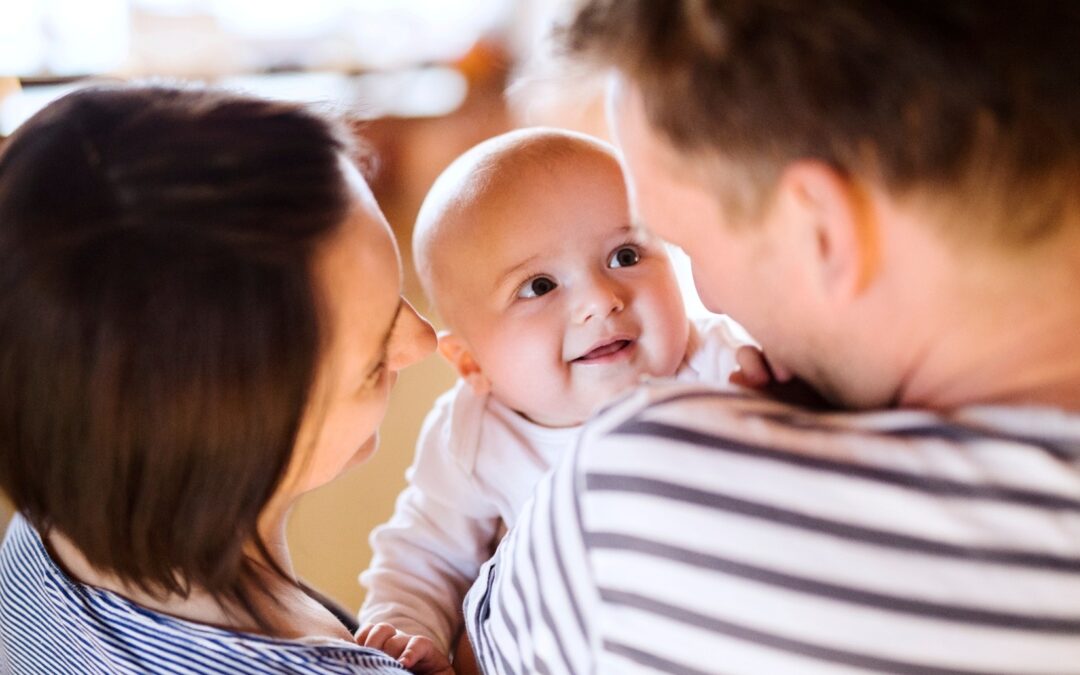
Some of the sweetest baby milestones happen between people. A newborn who quietly studies your face may become the baby who laughs at a familiar sound, turns when you call their name, or waves when someone leaves the room.
Those changes unfold alongside physical, communication, and early thinking skills throughout the first year. Development does not follow one exact schedule, but watching how your baby becomes more responsive and interactive offers an interesting view of how much is changing.
At First, Connection Is Subtle
During the newborn months, interaction may not look like much from the outside. Babies spend a lot of time sleeping, feeding, and adjusting to their surroundings.
Still, they are beginning to pay attention.
Your baby may study a face held nearby, react to a familiar voice, or settle when held and spoken to. As the weeks pass, periods of alertness often become longer. Head control gradually improves, and coos begin joining cries as another way to make sound.
By about 2 months, many babies smile in response to another person. They may also watch you move, make sounds other than crying, react to loud noises, and briefly hold their head up during tummy time.
When Do Babies Start Smiling?
Newborns sometimes smile reflexively, including during sleep. A social smile is different because it happens in response to another person.
Social smiling commonly becomes noticeable around 2 months, although timing varies. You may see it when you lean close, speak softly, or smile at your baby first.
That first returned smile is memorable because interaction suddenly feels more two-sided.
Smiles Turn Into Back-and-Forth Interaction
During the next few months, babies often become much more expressive.
A smile may turn into a chuckle or laugh. Your baby may make a sound, wait for your response, and then vocalize again. Familiar voices and faces often draw more obvious reactions.
Physical development is changing at the same time. Around 4 to 6 months, babies may gain steadier head control, reach toward toys, roll, and spend more time sitting with support. These abilities give them new ways to look around and participate in what is happening.
By about 6 months, many babies recognize familiar people, laugh, reach for things they want, and take turns making sounds.
When Do Babies Start Laughing?
Laughter often appears during the first half of the year, though some babies laugh earlier or later than others.
A funny sound, an exaggerated facial expression, or a familiar playful routine may get the first giggle. Over time, babies often begin anticipating favorite interactions, which makes shared play even more engaging.
Familiar People Begin to Matter in New Ways
Later in the first year, babies often become more aware of who is around them.
You may notice a clearer reaction when a familiar caregiver enters the room. Your baby may look toward you when you speak or respond differently when someone familiar leaves.
Communication also becomes more varied. Repeated sounds such as “bababa” or “mamama” may emerge, and babies often pay closer attention to words they hear regularly.
By about 9 months, many babies:
- Look when their name is called
- Babble with repeated sounds
- Sit without support
- Move objects between their hands
- Look for something that disappears from view
- Show clear reactions when familiar people leave or return
Mobility may also be changing. Some babies roll, scoot, creep, crawl, or use another way to get where they want to go.
When Do Babies Respond to Their Name?
Responding to a name often becomes more consistent during the later part of the first year.
At first, your baby may only turn occasionally. With time, you may notice a clearer response, especially when there are fewer distractions.
As with any single milestone, it is better to look at the broader pattern of communication and interaction than one isolated moment.
Simple Games Start Becoming More Fun
By the later months of the first year, babies often become more active participants in play.
Peekaboo is a good example. Early on, your baby may simply watch. Later, they may smile before you reappear, reach for the covering, or try to continue the game themselves.
You may also notice your baby:
- Copying simple actions
- Clapping
- Waving
- Repeating sounds or gestures that get a reaction
- Dropping an object and watching what happens
- Taking turns during simple games
These moments draw on several areas of development at once. A wave involves physical control and communication.
Peekaboo involves attention, memory, and social interaction. Clapping takes coordination, but it may also become part of a shared song or game.
By the First Birthday, Interaction Looks Different
Near the first birthday, babies often have many more ways to take part in what is happening around them.
Common 12-month milestones include waving goodbye, playing simple interactive games, understanding “no,” looking for hidden objects, placing objects into containers, pulling to stand, and cruising while holding furniture.
Many babies also pick up small objects with increasing precision.
Independent walking is not required at 12 months. Some babies walk before their first birthday, while others reach that milestone later.
The same variation applies to social milestones. One baby may be an enthusiastic waver while another shows more interest in sounds, movement, or object play.
Social Milestones Do Not Develop in Isolation
Smiling, laughing, playing, and gesturing depend on other developing abilities.
Better head and body control help babies look toward someone and stay engaged. Sitting independently frees the hands for clapping and playing. Growing attention helps babies follow familiar songs, games, and routines. More precise hand movements support gestures such as waving and pointing.
That is one reason baby milestones are most useful when viewed together rather than as separate boxes to check.
Interaction Does Not Need to Be Complicated
You do not need special activities to encourage social interaction.
Talk to your baby while getting them dressed. Pause after making a sound and see whether they respond. Sing the same songs often enough that they become familiar. Read simple books together. Play peekaboo when your baby seems interested.
Even a diaper change provides time for eye contact, conversation, smiles, and response.
Follow your baby’s cues. Sometimes they will be eager to engage, and other times they may need quiet or a break.
Relationships Matter in Daycare, Too
Babies spend much of their day learning through interactions with the people who care for them.
At Celebree School of Warrington, infant care includes responsive care, comforting routines, and everyday interaction that helps babies build early connections. In daycare in Warrington, PA, familiar caregivers become part of the baby’s daily rhythm through feeding, play, songs, movement, and conversation.
A smile during a routine, a laugh during a familiar song, or a wave at the end of the day may seem small. Together, these moments reflect the growing social awareness taking shape throughout the first year.
When a Developmental Question Is Worth Asking
Babies develop on different timelines, and variation is expected.
Talk with your child’s pediatrician if your baby is not meeting expected milestones, loses a skill they previously had, or if something about their communication, interaction, movement, or overall development concerns you.
From an early social smile to a favorite back-and-forth game, the first year brings many new ways for your baby to connect with the people around them.