
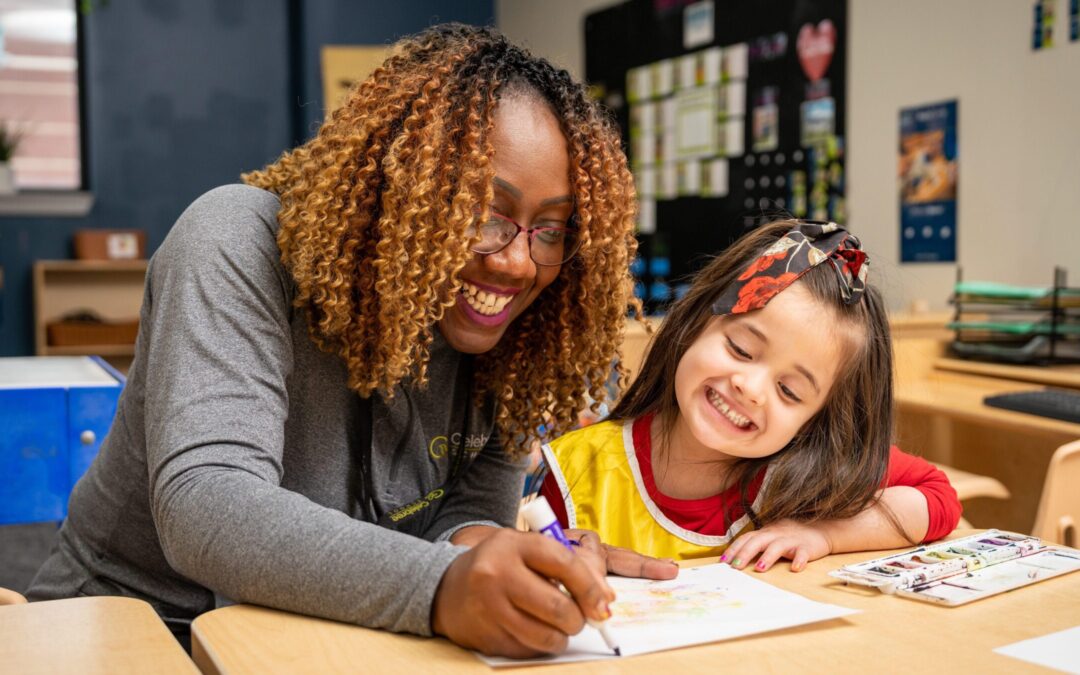
What does a child need to be ready for kindergarten? Early reading, math, and science skills matter, but so do the skills that make a classroom work: following a routine, getting along with classmates, communicating needs, and approaching new things with curiosity. At Celebree School of Tulsa, our Pre-K children practice both every day, through morning routines, conversations with friends, and hands-on science.
Our owner, Karl, jokes with his wife and co-owner Jennifer, school director Kim, assistant director Tonya, and Pre-K teacher Ms. Lisa that he wants our Pre-K kiddos to know their multiplication tables before kindergarten. While that might be a nice vision, they like to remind him that Kindergarten readiness is the priority over multiplication at this age.
Making Morning Goodbyes More Manageable
For some children, the hardest part of the school day happens before the learning activities even begin. Saying goodbye to a parent can bring big feelings, especially when a child is adjusting to a new classroom or routine. Morning transitions tend to be more challenging for toddlers and two-year-olds, but it’s equally fair to say that an older preschool and Pre-K child that had a tough time sleeping the night before or had their morning routine disrupted can have a tough time at arrival.
In our Pre-K classroom, one way we support that transition is by preparing an inviting, open-ended activity before children’s arrival. We call it a “provocation”—a setup designed to spark curiosity and invite exploration. For families, it may look like an activity waiting for their child, but what it means for us is a shared starting point for the teacher and the child. In our center, Ms. Lisa welcomes the children, acknowledges their feelings using Conscious Discipline related skills, and invites them to explore together. They may need reassurance and time. But a familiar arrival routine, a caring teacher, and an engaging invitation can help them move into their day.
A Familiar Routine Creates Room for Learning
Think about how it feels to enter an unfamiliar place to do something, but you have no idea what to do when you arrive or how to get it done. Young children experience that same uncertainty without the benefit of the 20 or 30 or 40 years of experience that we have as adults. With only 4 years of life experience, they don’t see that the adults around them know the day is carefully planned.
Predictable routines help children become familiar with classroom life. Knowing that there are times to play, learn, eat, go outside, and rest gives the day a recognizable rhythm. Rituals bring connection to that rhythm. A personal greeting, a familiar song, shared classroom traditions help a child feel welcomed and included. Routines and rituals work together: one helps children understand what to expect, while the other helps them feel connected to the people sharing their day. With that foundation, children have more room to participate, explore, and practice new skills.
Building Confidence, Connection, and Independence
Ms. Lisa who has taught at both the Kindergarten and preschool level understands exactly what is needed to help children be prepared. She brings more than 10 years of teaching experience to life in the lessons planned using The Creative Curriculum, and she leverages Conscious Discipline skills to help children practice listening to others, taking turns speaking, asking for help, and sharing their discoveries. For a young child, speaking up might mean telling a teacher, “I need help opening this,” or telling a friend, “I’m still using that,” or “Look what I did!” These moments may seem small, but they give children practice finding their voice and communicating with the people around them while learning the foundation for STEM-Based activities.
Friendships are learning opportunities, too. Sharing materials, joining a game, and working through a disagreement all require practice and guidance. Children are just beginning to learn about things like handling disappointment, waiting for a turn, and recognizing someone else may have a different idea.
Our location along South Yale Ave, south of I-44, serves families from both Midtown and South Tulsa and it gives Pre-K children a place to develop these skills with caring adults nearby. The goal is steady growth in confidence and independence, with support that meets each child where they are.
Big Learning Inside an Apple Volcano
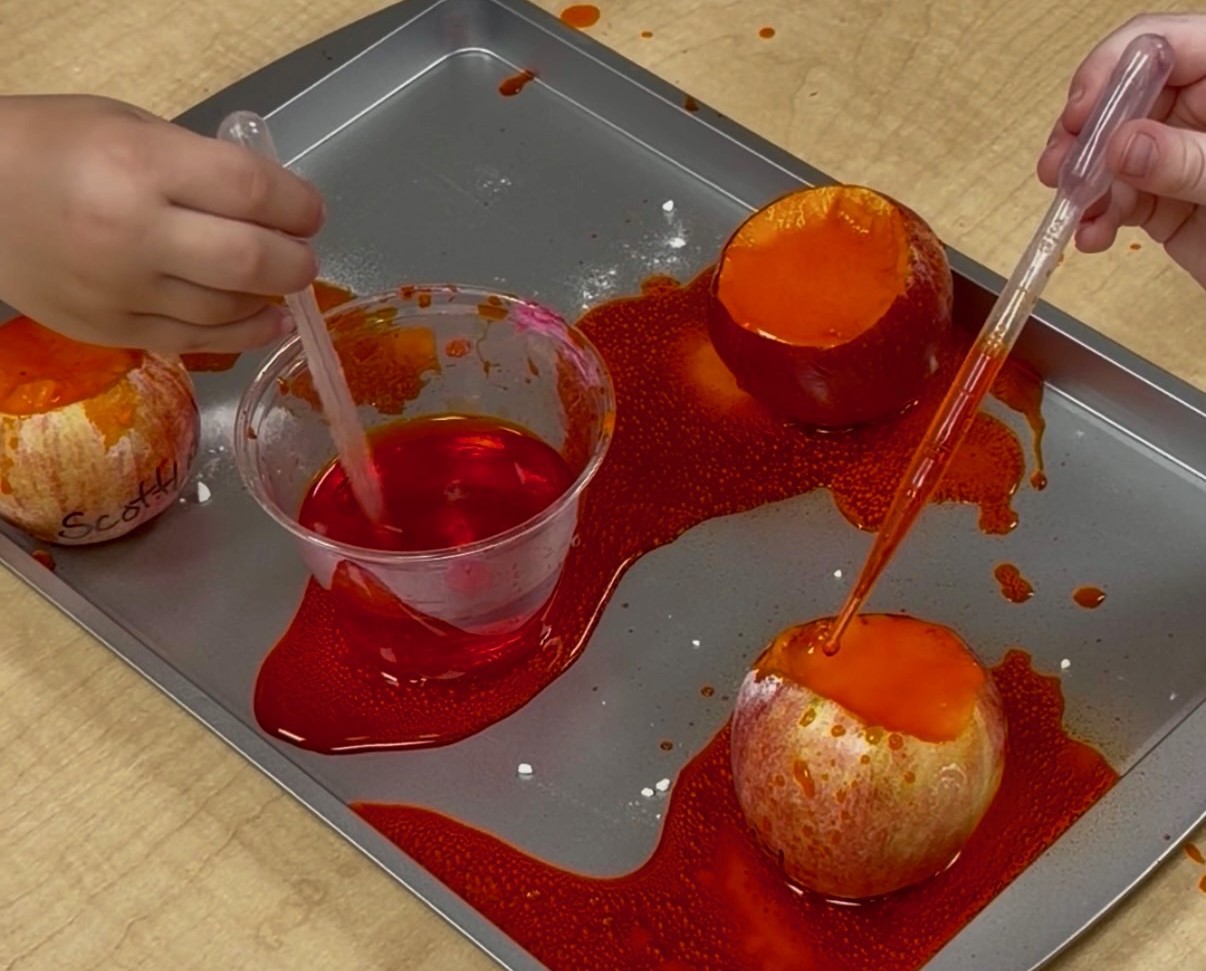
Recently, our Pre-K students explored a fall-themed science activity by making a volcano inside an apple. With teacher supervision, they combined baking soda and vinegar and watched a colorful, bubbling reaction. The excitement was easy to see. The experience created opportunities for children to observe, wonder, talk, and think. An activity like this invites questions and can help form the foundation of sound skills associated with STEM activities. A few of Ms. Lisa’s favorites are “What do you think will happen? What do you notice? How did the materials change?”
Children do not need to understand every detail of a chemical reaction to begin thinking like scientists. They can make a prediction, watch what happens, and compare the result with their original idea. In this example, the apple connected the experience to our fall theme, bringing a familiar seasonal object into an unexpected activity. That connection made the exploration especially engaging. Hands-on, play-based activities designed by Ms. Lisa and Creative Curriculum by Teaching Strategies give children something concrete to discuss. They can describe the bubbling mixture, listen to a friend’s observations, and ask new questions. Science becomes an opportunity to practice both curiosity and communication.
Helping Families Recognize the Learning in Play
When children describe their day, families may hear, “We played,” or “We made a volcano!” Those simple descriptions hold a great deal of learning. During play and exploration, children have opportunities to use language, make decisions, handle materials, collaborate, and keep trying when something does not work as expected.
Families can continue those conversations at home with a few open-ended questions such as, “What surprised you today?” “What did you try?” “What happened next?” There is no need to turn the conversation into a quiz. Showing interest in a child’s ideas helps make their thinking part of the conversation.
Growing Toward Kindergarten, One Experience at a Time
Kindergarten readiness develops through many experiences over time. Children need opportunities to build confidence, communication, friendships, and independence early on, alongside those academic skills we understandably want to see. At Celebree School of Tulsa, this starts as early as our two-year-old preschool program where we introduce letter recognition and our preschool program where we introduce things like Phonemic Awareness which is often associated with the Science of Reading. Our Pre-K classroom gives children room to practice those skills through routines, relationships, and hands-on learning. Whether they are settling into the morning, speaking up for themselves, or actively participating in making an apple volcano bubble, they are taking meaningful steps toward their next chapter. Someday, they will even learn their multiplication tables for Karl, but it may just be a little later than Pre-K.
We welcome families who want to learn more about our preschool programs where it starts and the Pre-K program where it all comes together. See these experiences in action for yourself by scheduling a visit and check out the feedback from our Pre-K Prep parents and others in our school family. To see more about the Pre-K children’s investigation into Apples check out these excerpts on Instagram or YouTube.