
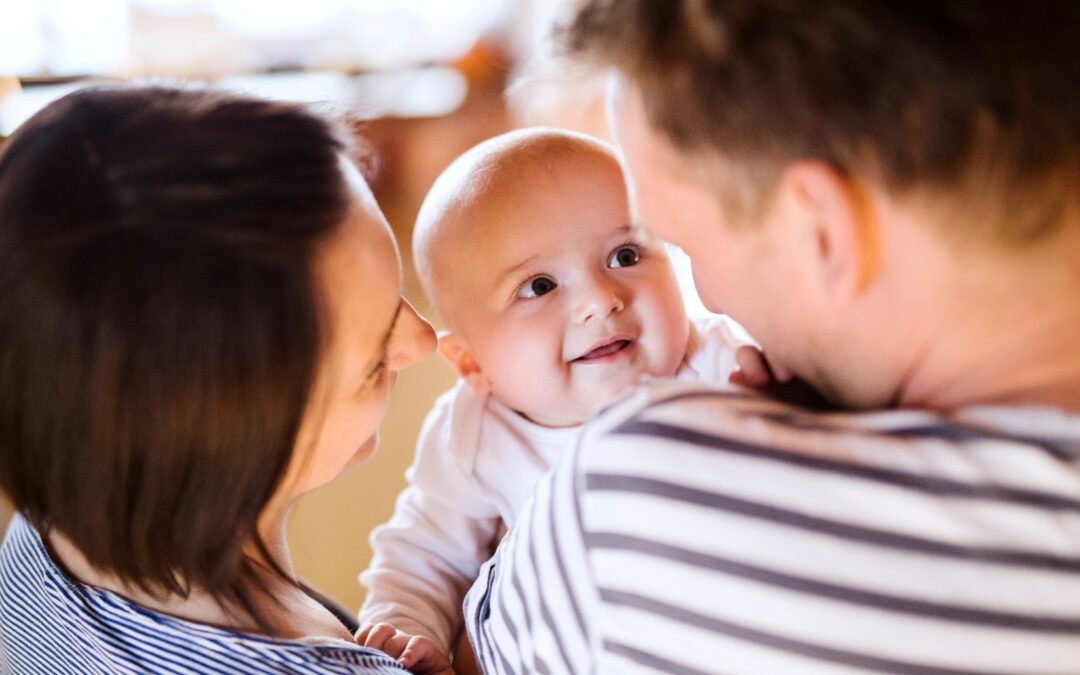
A newborn may simply stare at a soft toy held nearby. A few months later, that same baby may reach for it, grab it, turn it over, mouth it, drop it, crawl after it, or search for it when it disappears.
The toy did not change. Your baby did.
Over the first year, baby milestones gradually give children more ways to explore what is around them. Looking and listening come first. Reaching, grasping, sitting, moving, and more purposeful play follow as strength, coordination, communication, and curiosity develop.
At First, Babies Explore by Looking and Listening
In the earliest months, much of a baby’s exploration happens from one place.
They may study your face, react to your voice, watch movement nearby, or turn toward a sound. As awake periods become longer, there is more time to notice what is happening around them.
By around 2 months, many babies begin smiling in response to another person, making sounds besides crying, watching people move, and briefly lifting their head during tummy time.
Those early responses may seem quiet compared with crawling or pulling to stand, but they are part of the same developmental story. Your baby is becoming more aware of people, sounds, and movement.
Reaching Brings More of the World Within Reach
During the middle months of the first year, babies begin acting more deliberately on what catches their interest. A toy that was once something to look at becomes something to touch.
At first, reaching may look like a swipe or an imprecise movement. With time, babies gain more control and begin grasping objects, holding them longer, and bringing safe items toward the mouth.
When Do Babies Start Grabbing Things?
Grabbing develops gradually during the early and middle months.
You may first notice your baby reaching toward an interesting object without quite getting it. Later, the hand closes around the toy more reliably, and your baby begins exploring it by holding, turning, shaking, or mouthing it.
Putting safe objects in the mouth is also a common way babies investigate during infancy. It gives them information about texture, shape, and size, along with what they learn through sight and touch.
Sitting Changes the View
As sitting develops, your baby gets a new perspective.
Instead of looking mostly from your arms or the floor, they can take in more of the room from an upright position. Their hands also become more available for play.
A baby sitting more steadily may reach in different directions, transfer an object from one hand to the other, bang two objects together, or turn something over to inspect it.
When Do Babies Sit Up?
Sitting usually develops in stages rather than all at once.
Babies often begin with support, then use their hands for balance before sitting more steadily on their own. By around 9 months, many babies sit without support, although the timing varies.
Once sitting becomes easier, exploration often becomes busier because babies can look, reach, and handle objects from the same position.
Repetition Helps Babies Figure Out What Things Do
Babies often repeat the same action many times. Shake the rattle again. Drop the cup again. Bang the toy against the floor again.
The repetition gives them another chance to experience the result.
Different objects behave in different ways. A soft toy can be squeezed. A ball may roll away. A rattle makes noise when shaken. A cup sounds different when tapped against the floor.
These simple experiments do not require special activities. They happen naturally while babies play with safe objects and interact with the people around them.
Mobility Expands the Area to Explore
Rolling, scooting, crawling, or another form of mobility changes the scale of a baby’s world.
An interesting object no longer has to be placed directly beside them. They may turn, shift, or move across the floor to investigate it.
When Do Babies Crawl?
Many babies begin crawling during the second half of the first year, but timing and style vary widely.
Some crawl on hands and knees. Others scoot, creep, roll, or find another way to move before standing.
Crawling is only one part of the larger change. Greater mobility gives babies more say in what they approach, where they go, and what they choose to explore.
Near the First Birthday, Exploration Becomes More Deliberate
Later in infancy, babies often interact with objects in more varied ways.
They may put something into a container and take it back out. They may search for an object that disappeared, pick up smaller items with greater precision, or pull to stand because something interesting is just above eye level.
Communication also becomes part of exploration. A baby may reach, wave, or gesture toward something that has caught their attention.
By around 12 months, many babies have much more control over how they investigate their surroundings, even if they are not yet walking independently.
Everyday Experiences Give Babies Plenty to Investigate
Babies do not need elaborate sensory setups to explore.
Floor time, books, songs, conversation, safe toys, and ordinary household objects can all hold their attention. A textured page feels different from a smooth cup. A familiar song sounds different from a new noise. A ball behaves differently from a block.
What matters most is having safe opportunities to look, listen, touch, move, and interact at a pace that fits the baby’s current abilities.
Exploration in Daycare
At Celebree School of Owings Mills, infant care includes responsive relationships, familiar routines, sensory play, and opportunities to learn through experience.
At daycare in Owings Mills, MD, babies have time to look, listen, move, interact, and safely explore as their abilities develop.
For a younger infant, exploration may mean watching a caregiver’s face, listening to a song, or spending time on the floor. An older baby may be reaching for objects, sitting during play, moving toward something interesting, or experimenting with how different toys behave.
The experiences change as the baby grows.
When to Ask About Development
Babies reach milestones on different timelines, but concerns are worth discussing with your child’s pediatrician.
Ask about anything that worries you, including movement, communication, interaction, or how your baby responds to people and the environment. It is also important to bring up a skill your baby previously had and then lost.
Over the first year, exploration becomes more active, more mobile, and more intentional. What begins with watching and listening gradually expands into reaching, moving, experimenting, and discovering more of the world firsthand.