
100 Years of Black History Month: How Celebree School of Owings Mills Celebrates Cultural Learning
February 2026 marks the 100th anniversary of Black History Month, initiating a year-long celebration of a century of Black history commemorations. Established in 1926 as “Negro History Week” by Dr. Carter G. Woodson. In 1976, the initial week-long celebration extended to a month-long observance.
The Origins of Black History Month
Often deemed “The Godfather of Black History”, Carter G. Woodson founded “Negro History Week” in 1926. At the time, Mr. Woodson chose the week of Abraham Lincoln & Frederick Douglass’ birthdays, to celebrate the newly formed celebration.
Mr. Woodson, a noted historian and scholar was born to enslaved parents and dedicated his life to studying and promoting the achievements of African Americans. As a result, his scholarship continues to influence how history is taught across the country.
Teaching a Broader Historical Perspective
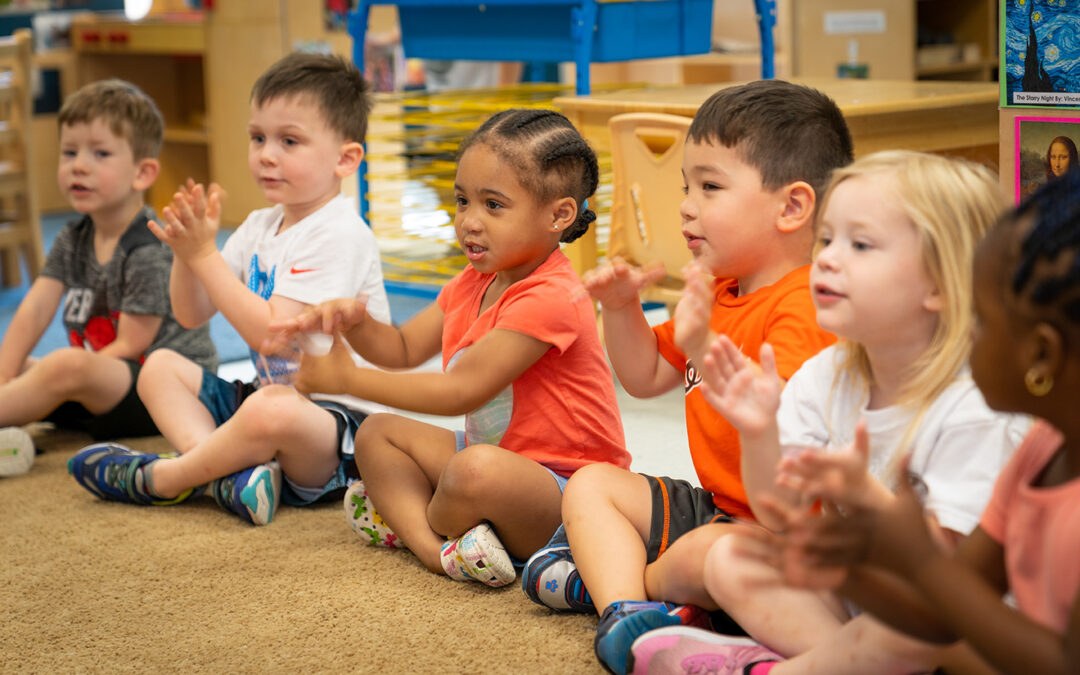
This month at Celebree School of Owings Mills, children have been learning about African Americans who have made meaningful contributions across a wide range of fields. Black History Month provides an opportunity to highlight important historical moments, influential leaders, and cultural achievements that have shaped our nation. In doing so, we help children begin to understand the diverse voices that have contributed to American history.
While many lessons often begin with the documented arrival of Africans in America in 1619, history extends far beyond that point. African civilizations, cultures, and accomplishments existed long before 1619, and exploring this broader context allows for a more comprehensive understanding of history.
In addition to learning about widely recognized figures such as Dr. Martin Luther King Jr., Rosa Parks, Harriet Tubman, and Sojourner Truth, we encourage families to explore additional individuals whose stories may be less commonly discussed but are equally impactful.
Likewise, introducing a variety of voices helps foster curiosity and thoughtful discussion. Especially since Black history is an important part of American history and can be explored throughout the year.
Influential Figures and Resources to Explore
Below, you will find a list of resources, individuals, and information to help begin or continue your family’s learning journey.
Historical Foundations & Scholarship
Carter G. Woodson delve a bit deeper into his life/contributions. His advocacy and scholarship are noted and impactful of America’s history.
Before the Mayflower— A comprehensive history of African Americans, tracing origins in western Africa through the civil rights movement. Importantly, it highlights powerful African civilizations and contributions long before 1619.
Arts, Culture & Literary Influence
Amy Sherald, born in 1973 and hailing from Columbus, Georgia, this noted painter is primarily known for creating the official portrait of Michelle Obama. Additionally, Ms. Sherald also has ties to Baltimore as a graduate of the Maryland Institute College of Art. You can see her current collection of work: American Sublime, that can be viewed until April 5, 2026, at the Baltimore Museum of Art (BMA).
The Harlem Renaissance—prolific period of African American cultural, artistic, and literary expression between 1918 and the mid-1930s. During this time, Harlem became the epicenter of this movement was Harlem, USA. During this explosion, the arts of the time influenced global culture. Be sure to check out instrumental figures like Langston Hughes, Duke Ellington, and philosopher Alain Locke.
Ta-Nehisi Coates, Baltimore’s native son, is a NYT best-selling author, journalist, and activist. His 2015 release of Between the World and Me is a powerful exploration of racism in America.
Nikole Hannah-Jones—author and American investigative journalist. Her seminal work, The 1619 Project, won the Pulitzer Prize in 2020.
Entrepreneurship & Community Impact
Alisha “Pinky” Cole-Hayes, Baltimore’s own restaurateur, first began selling its plant-based burgers in July of 2018. With eight brick-and-mortar locations (including Baltimore), Ms. Coles continues to expand her business and philanthropic efforts.
Reginald Lewis—Baltimore’s own (see the theme, here?) was an American businessman, and the first African American to build a billion-dollar company, TLC Beatrice International Holdings. His foundation has donated millions to various causes, and the Reginald F. Lewis Museum of Maryland African American History & Culture (located in downtown Baltimore) is named in his honor.
Science & Medical Contributions
Henrietta Lacks was not born in Maryland but moved to the state in 1941 as a newlywed. Ms. Lacks’ cancer cells are the source of the HeLa cell line (the first immortalized) and continue to be a source of invaluable medical research & data.
Educational Resources for Families
Smithsonian’s National Museum of African American History & Culture—follow their social media pages to learn more about historical figures/events. There are posts daily.
Continuing Cultural Learning Beyond February
We welcome you to share new discoveries with your children and encourage them to bring those conversations into the classroom. Black history is woven into American history and can be explored and appreciated throughout the year.
At Celebree School of Owings Mills, we remain committed to fostering curiosity, respect, and cultural awareness in every classroom.