
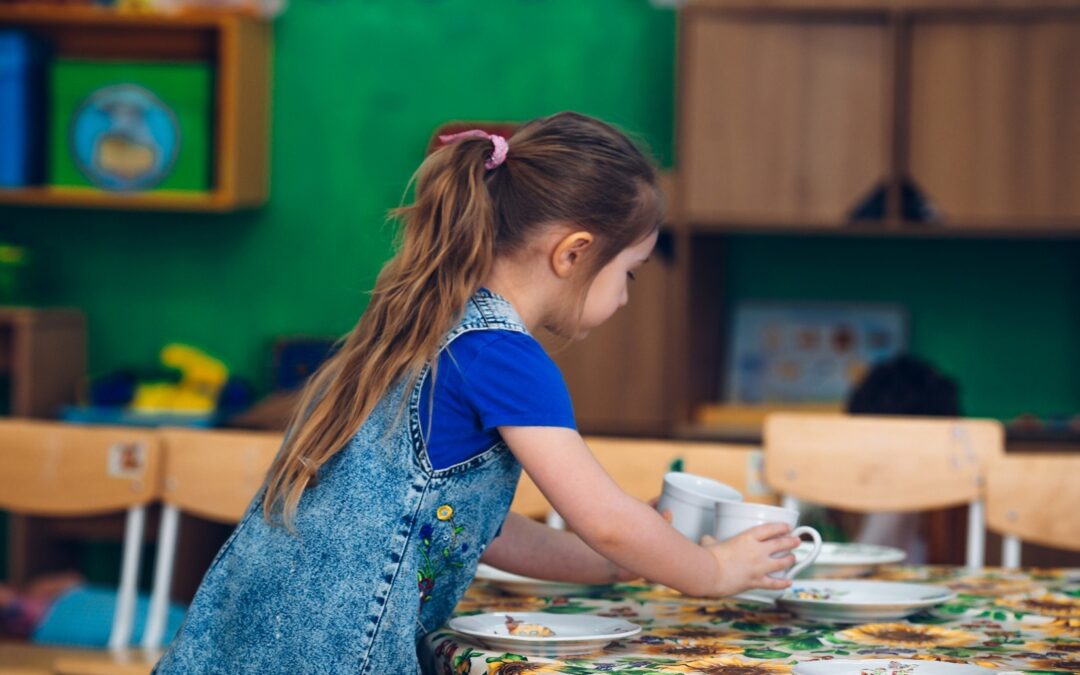
A preschooler carries napkins to the lunch table. A toddler returns a book to the shelf after story time. An older child helps check the weather before the class heads outside.
These may seem like small moments, but children often take them seriously. Being trusted with a real task gives them a chance to participate in the classroom rather than having adults do everything for them.
At a Newton daycare, classroom responsibilities can tell you a great deal about how teachers encourage independence. The strongest examples are simple, appropriate for the child’s age, and woven naturally into the day.
Children Want to Feel Useful
Young children are often eager to help, especially when the task feels real.
They may want to carry something, wipe a small spill, feed a classroom pet, or pass materials to their friends. The finished result may not look exactly the way an adult would have done it, but perfection is not the point.
A small responsibility tells the child, “You are part of what happens here.”
That feeling can make familiar routines more meaningful. Instead of waiting while a teacher prepares everything, children have a reason to take part.
Classroom Jobs Do Not Need to Be Formal
Some classrooms use a job chart with rotating roles. Others invite children to help as opportunities come up during the day.
Both approaches can work well.
A teacher might ask one child to bring a basket to the table and another to collect crayons after an activity. Children may carry their own cup, return a puzzle, help turn off a light, or hold the door while the group moves outside.
These moments do not always need a special title or reward. Helping can simply become part of the way the classroom works.
During a visit, notice whether children have appropriate ways to participate or whether adults handle every part of the routine for them.
The Responsibility Should Fit the Child
A classroom job should feel manageable, even when the child still needs some help.
A toddler may be ready to put a tissue in the trash or carry a lightweight item across the room. Preschoolers may sort materials, pass out supplies, or help prepare an activity. Children in pre-K can often follow a few steps, work with a classmate, or remember a recurring role with less prompting.
Teachers should still consider the individual child. One preschooler may happily speak in front of the group, while another would rather help behind the scenes. A child who is new to the classroom may need time before taking on a visible role.
The goal is to offer a realistic next step, not to compare children or push them into a task that feels overwhelming.
Helping Is Not a Performance
Children should not feel that they have failed because a stack of paper is uneven or a cup spills on the way to the table.
A teacher can respond calmly and help the child finish without taking over immediately. They might steady the basket, show the next step, or say, “Let’s try that together.”
This keeps the experience positive while still teaching care and follow-through.
Praise can be simple and specific. Instead of making every task a major accomplishment, a teacher might say, “You brought all the brushes to the table,” or “You remembered where the books go.”
That kind of response lets the child know their effort was noticed without turning helping into a performance for adult approval.
Shared Jobs Help Children Notice One Another
Classroom responsibilities are not only about independence. They can also help children understand that they are part of a group.
When a child passes cups at snack, they begin noticing how many classmates are sitting at the table. When two children carry a bin together, they have to adjust their pace and make room for one another. When the class cleans up a shared activity, everyone has a reason to contribute.
These are early experiences with cooperation.
Young children will still need reminders. One child may want to complete every job, while another may lose interest halfway through. Teachers can help them take turns, work together, and understand that classroom responsibilities belong to everyone.
Teachers Still Hold the Adult Responsibilities
Inviting children to help does not mean handing adult work over to them.
Teachers remain responsible for supervision, safety, cleaning, classroom organization, and making sure routines are completed properly. A child may wipe a small spill with support, but an adult still handles any necessary cleaning.
Children may help carry materials, but teachers decide what is safe for them to move. The distinction should be clear.
Classroom jobs should give children meaningful participation without placing pressure on them or asking them to manage responsibilities beyond their age.
Notice How Teachers Offer Help
The way a teacher introduces a task can shape how the child feels about it.
A command may make the responsibility feel like a punishment. An invitation gives the child a chance to take part. You may hear:
- “Would you like to help me carry these?”
- “We need someone to put the markers back.”
- “Can you show our new friend where the cups go?”
- “You can hold this side, and I’ll hold the other.”
Teachers should also know when to step back. A child may need an extra moment to work out how to complete the task. Unless safety is involved, adults do not always need to correct every movement or make the process faster.
A little patience gives the child room to think.
Look at Whether the Classroom Supports Independence
The environment can either invite children to help or make participation difficult.
Notice whether everyday materials are stored where children can reach them. Are shelves clearly arranged? Do children know where books, toys, or personal belongings go? Are there simple routines they can begin to manage on their own?
A classroom does not need to place everything within reach. Some materials belong with adults. Still, children should have access to the items they are expected to use and return.
When the room is arranged thoughtfully, children can take more responsibility without waiting for an adult at every step.
Responsibilities Can Grow With the Child
Small classroom jobs often lead to broader independence over time.
A child who first carries one item may eventually prepare part of an activity. Someone who needs help putting belongings away may begin remembering the routine independently. A child who once watched others may become ready to show a new classmate what to do.
Progress may happen gradually, and it will not look the same for every child.
Teachers can support that growth by noticing when a task has become easy and offering a little more responsibility. They can also step back when a child is tired, adjusting to the classroom, or simply needs extra help that day.
Independence should have room to change with the child.
Ask How Classroom Responsibilities Work
As you tour a program, ask how children take part in everyday classroom routines. You might ask:
- What kinds of jobs do children have?
- Do responsibilities rotate?
- How do teachers adjust tasks by age?
- What happens when a child does not want a job?
- How do teachers help when a task is difficult?
- Are children expected to help during cleanup?
- How do classroom responsibilities change in pre-K?
The answer should sound flexible rather than rigid. Children benefit from opportunities to contribute, but they should not be embarrassed, pressured, or treated as though a classroom job must be completed perfectly.
Small Responsibilities Can Mean a Great Deal
A classroom job may last only a minute, yet it can give a child a meaningful role in the day.
They begin to see that their actions matter. They learn that shared spaces require care and that classmates sometimes depend on one another. They also discover that they can complete more tasks than they may have realized.
At Celebree School of Newton, teachers create age-appropriate opportunities for children to participate in classroom routines, care for shared materials, and build independence over time. Families exploring Newton daycare can schedule a visit to see how these everyday moments become part of learning, connection, and classroom life.