
You may have expected the preschool years to feel a little calmer.
Your child can use more words now. They understand routines better than they did as a toddler. They may be able to dress themselves, tell stories, remember favorite songs, and explain exactly which snack they want after school.
Then one small change sends the whole afternoon sideways.
For many families exploring preschool in Newton, MA, big emotions are one of the most confusing parts of this stage. Parents often wonder why a child who seems so capable in one moment can become overwhelmed by a transition, a disappointment, or a turn that ended too soon.
The answer is reassuring. Preschoolers are still learning how to manage strong feelings, and that learning takes time, practice, and patience.
Big Feelings Are Still Normal at Preschool Age
Preschoolers are growing quickly, but they are not miniature elementary school students.
Their brains and bodies are still developing the skills needed to pause, think, wait, adjust, and recover when something feels hard. A preschooler may know the rule, understand what you said, and still struggle to follow through when they are tired, disappointed, hungry, overstimulated, or unsure of what comes next.
That does not mean your child is trying to be difficult.
It means they are still building emotional regulation, impulse control, flexibility, and communication skills. Those skills develop gradually through everyday experiences with adults who help them feel safe, name what is happening, and practice what to do next.
Why Small Moments Can Feel So Big
Adults can usually tell the difference between a minor frustration and a true emergency.
Preschoolers are still working on that.
A broken crayon, a friend choosing a different game, a change in the morning routine, or a favorite shirt being in the laundry can feel enormous to a young child. Their emotional response may look bigger than the situation because their ability to manage frustration is still catching up to the strength of the feeling.
This is especially true during transitions. Moving from playtime to cleanup, from home to school, or from outdoor time back to the classroom requires flexibility. For a preschooler who is deeply engaged in the moment, stopping one activity and shifting to another can be genuinely hard.
A strong preschool environment does not expect children to handle those moments perfectly. It gives them steady guidance while they learn.
Preschool Helps Children Practice Self-Regulation
Self-regulation is not something children master all at once. They build it through repetition, relationships, and routines.
In a preschool classroom, children have many opportunities to practice waiting for a turn, listening to a teacher, joining a group activity, solving a problem with a friend, and calming their bodies after excitement or frustration. These moments may seem ordinary, but they are deeply connected to kindergarten readiness.
At Celebree School of Newton, teachers support children with warm relationships, predictable routines, and guidance that helps them understand their feelings. When a child is upset, the goal is not simply to stop the emotion as quickly as possible. The goal is to help the child recognize what they are feeling and begin learning a better way to respond.
Naming Feelings Gives Children Language
Many preschoolers feel more than they can explain.
A child may say, “I don’t like school,” when what they really mean is, “I felt nervous when I didn’t know where to sit.” Another child may cry over a toy because they do not yet have the words to say, “I was still using that, and I felt upset when it was taken.”
Language gives children a bridge between feeling and behavior.
Teachers can help by using simple, clear words: frustrated, disappointed, worried, excited, tired, proud. Over time, children begin to connect those words to their own experiences. They learn that feelings have names, feelings change, and there are ways to ask for help.
That is a major part of social-emotional growth.
Big Emotions Are Not Separate From Learning
It can be tempting to think of preschool learning as letters, numbers, shapes, and early writing skills. Those matter, but they are only part of the picture.
A child who is learning how to calm down after disappointment is also preparing for kindergarten. A child who can ask for help, listen to another person’s idea, recover after a mistake, or try again after frustration is building skills that support learning in every subject.
Social-emotional growth and academic growth are closely connected. Children learn best when they feel secure, understood, and confident enough to participate.
This is one reason the preschool years are so important. They give children time to practice being part of a classroom community before the expectations of kindergarten become more formal.
What Teachers Can Do in the Moment
When a preschooler has a big emotional response, the adult’s response matters.
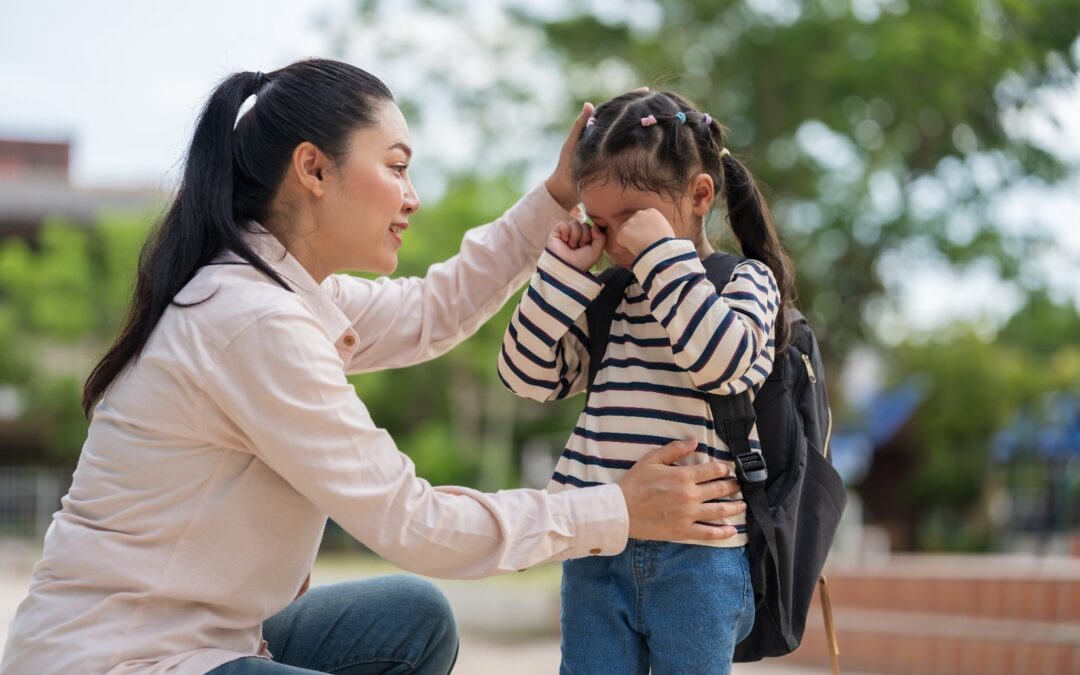
A calm teacher can help a child feel safe enough to regain control. That may include getting down on the child’s level, using a steady voice, offering a simple choice, helping the child take a breath, or giving them words for what happened.
These responses do more than manage the moment.
They model the skills children are learning to use on their own. Over time, a child who once needed an adult to guide every step may begin saying, “I need help,” “I’m mad,” or “Can I have a turn when you’re done?”
That progress is meaningful, even when it happens slowly.
How Parents Can Support Big Feelings at Home
You do not need a perfect script to support your preschooler’s emotions.
Start by staying as steady as you can. When your child is overwhelmed, too many questions or long explanations can make the moment feel harder. A short phrase such as, “You are upset because it was time to leave,” can help your child feel understood without turning the situation into a debate.
Predictable routines also help. Preschoolers often manage transitions better when they know what is coming next. A simple morning rhythm, a calm goodbye, and consistent expectations can give your child a sense of security.
It can also help to talk about emotions when everyone is calm. Books, pretend play, and everyday conversations give children a safe way to practice the language of feelings before they need it in a difficult moment.
When to Ask for More Support
Big emotions are normal, but parents should never feel alone if they are concerned.
If your child’s emotional responses are becoming more intense, lasting for long periods, interfering with daily routines, or making it difficult for them to participate in school or family life, it may be helpful to talk with your child’s teacher or pediatrician.
Early conversations can provide clarity, reassurance, and practical strategies. Every child develops at their own pace, and getting support when something feels hard is a sign of care, not failure.
Big Emotions Can Become Big Growth
The preschool years are filled with feelings because children are learning so much at once.
They are learning how to be part of a group, how to share space with peers, how to speak up for themselves, how to wait, how to recover, and how to try again. None of that happens without a few hard moments along the way.
At Celebree School of Newton, we see big emotions as part of a child’s growth, not something to rush past. With caring teachers, consistent routines, and a whole-child approach, children learn how to understand their feelings, build confidence, and develop the social-emotional skills that help them thrive.
If you are looking for preschool in Newton, MA, we would love to show you how Celebree School of Newton supports children through every part of their development, including the emotional moments that help them grow.