
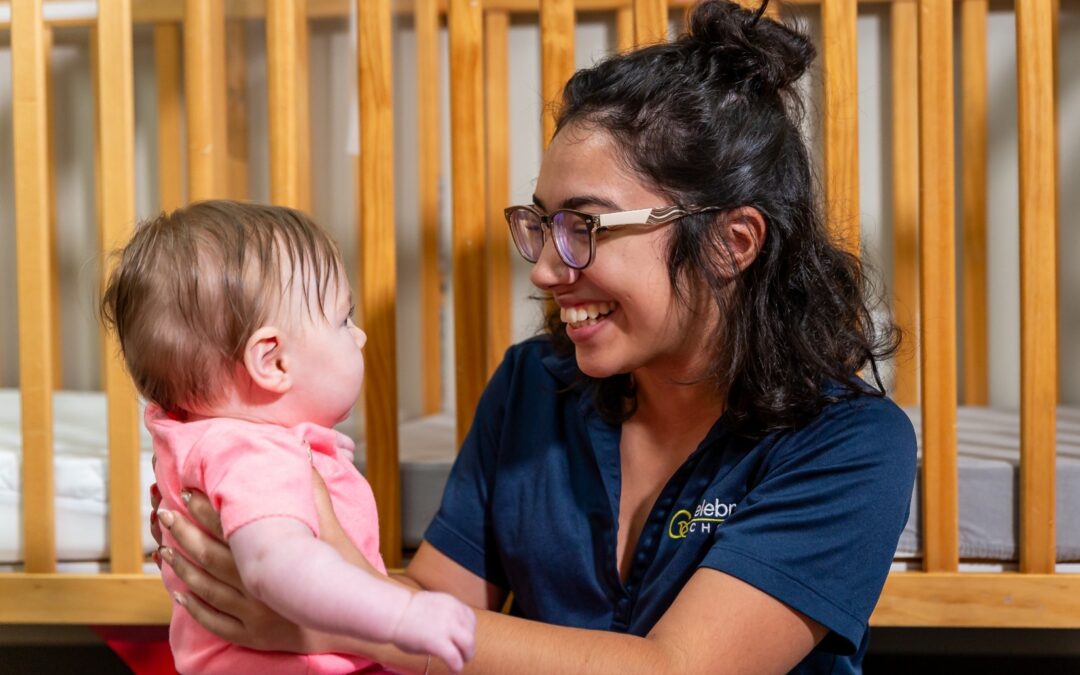
Babies do not arrive at daycare with identical routines.
One may eat frequently but nap briefly. Another may need more time to settle. Your baby may have a certain cry that means hunger, a favorite way to be comforted, or a sleep pattern that changed just this week.
That is where an individual care plan can help.
At Celebree School of Henrico, infant care begins as early as 6 weeks. Rather than expecting every baby to move through the day in the same way, teachers use what they learn about each child to help guide feeding, sleep, comfort, interaction, and early learning.
What Information Goes Into an Infant Care Plan?
A useful care plan starts with the details that make your baby’s routine their own.
That may include:
- Feeding patterns
- Sleep routines
- Signs of hunger or tiredness
- Comfort preferences
- Current interests
- Movement and emerging skills
- Ways your baby communicates
Age matters, but it is not the whole picture.
Two babies who are close in age may have very different schedules, temperaments, and ways of responding to the classroom around them.
At Celebree School of Henrico, families have in-depth conversations with the school when developing an infant care plan. That gives teachers a clearer picture of what your child needs from the beginning.
How Does the Plan Shape Feeding, Sleep, and Everyday Care?
A care plan becomes useful when it helps teachers make everyday decisions.
For example: When is your baby usually ready to eat? What does tiredness look like for them? What tends to help them settle? Has anything recently changed?
At Henrico, infants are assigned a primary caregiver, babies are held during feedings, and teachers use the information families share to help guide the day.
That means the care plan is not just paperwork completed at enrollment.
It gives teachers context for the routines they will be supporting over and over again.
Does an Infant Care Plan Stay the Same?
It should not.
Infancy changes too quickly for a plan created at the beginning to remain unchanged for months.
Your baby’s feeding pattern may shift. Naps may change. Awake periods may stretch longer. New interests may appear almost overnight.
You may also notice that your child:
- Wants to move more
- Responds differently to books or music
- Uses new sounds or gestures
- Needs a different way to settle
- Becomes more interested in particular objects or activities
Those changes can affect both care and learning.
An individual care plan should reflect the baby you have now, not only the routine your child had when they first enrolled.
Where Does Curriculum Fit Into an Individual Care Plan?
Individual care is not limited to bottles, naps, and diaper changes. What teachers observe can also help shape your baby’s learning experiences.
If your child becomes especially interested in sound, a teacher might respond with conversation, songs, or simple back-and-forth vocal play.
If reaching and grasping are becoming a bigger part of the day, safe objects can give your baby more opportunities to explore.
If movement is taking off, the classroom can offer more chances to practice on the floor.
At Celebree, teachers use observation and developmental assessment to help plan experiences that are appropriate for what children are currently doing.
Henrico’s infant program also incorporates areas such as language, physical development, personal and social development, gross and fine motor experiences, and simple sign language into individual care plans.
That means curriculum can grow out of the child’s current interests and abilities rather than asking every infant to complete the same activity.
What Role Does the Primary Caregiver Play?
A primary caregiver can become especially familiar with the small changes that are easy to miss.
Maybe your baby starts staying awake longer in the morning. Perhaps they suddenly become much more interested in one kind of movement. Maybe the way they show tiredness changes.
A caregiver who spends repeated time with your child can begin to notice patterns like these.
That familiarity helps make the care plan more useful because it adds ongoing observation to the information you are already sharing from home.
How Do Parents Help Keep the Plan Current?
What happens at home matters.
At Henrico, morning check-ins include information about eating, sleeping, and diapering. That gives teachers context for the day ahead.
You might mention:
- A difficult night of sleep
- A recent change in feeding
- A new soothing preference
- Something your baby has suddenly started practicing
- Anything that seems different that morning
At the end of the day, the information flows back to you.
Evening check-ins can include details about meals, diaper changes, naps, and play, along with anything teachers noticed during the day.
Celebree also uses Tadpoles to help families stay connected through daily information, photos, and messages. Keeping that exchange going helps the care plan stay current instead of becoming a static document.
Why Do Infant Age Groups Matter?
Celebree School of Henrico separates infant care into groups for babies from 6 weeks to 9 months and 9 to 18 months.
That does not mean every baby in the same age group has identical needs. It does recognize that different parts of infancy can look very different.
A younger infant may spend more time feeding, sleeping, observing, and being comforted. Later, babies may spend longer periods moving, exploring, interacting, and communicating in new ways.
Age helps shape the environment, while the individual care plan helps shape how your own child experiences it.
What Should You Ask About Your Baby’s Care Plan?
If you are touring an infant program, you do not have to limit your questions to hours, supplies, or classroom setup. You can also ask how the school learns about your baby as an individual.
Useful questions might include:
- What information do you want to know about my baby’s routine?
- How do I share changes in feeding or sleep?
- How does the primary caregiver contribute to the care plan?
- How do teachers use observations when planning activities?
- How does the care plan change as my baby grows?
- What should I tell you when something changes at home?
Those answers can help you understand how individualized care works in practice.
Learn More About Infant Daycare at Celebree School of Henrico
If you are considering infant daycare at Celebree School of Henrico, schedule a visit and bring the details that make your baby’s routine unique.
Talk with the team about feeding, sleep, comfort, early learning, communication, and how an individual care plan can evolve as your child grows.