
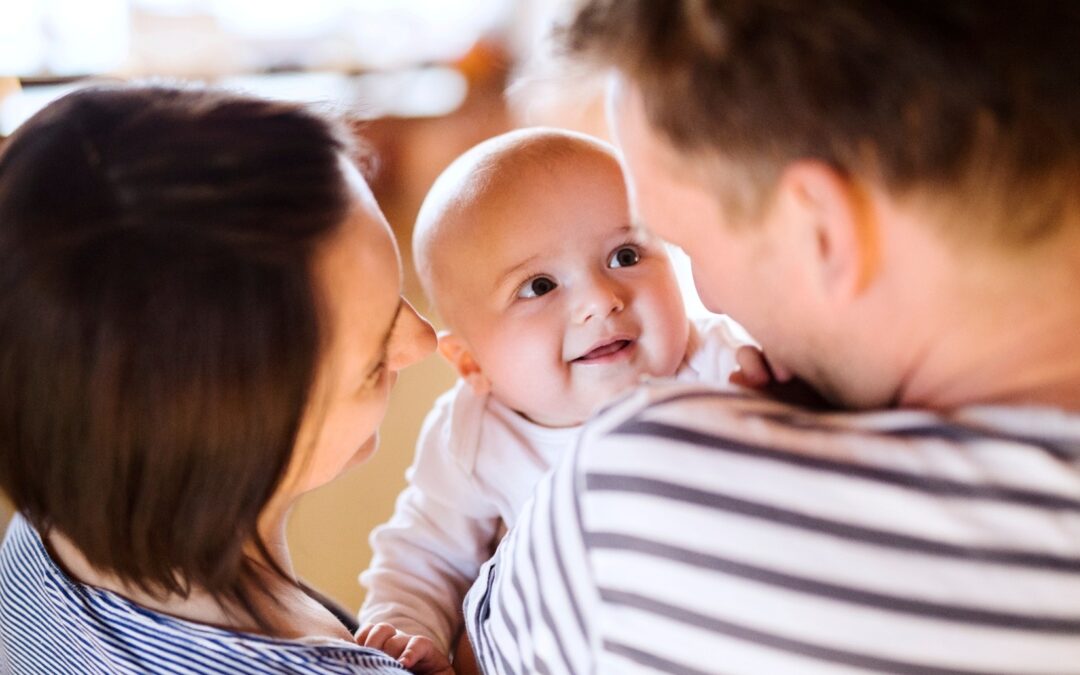
During the first year, movement gradually begins to carry more meaning. A newborn’s arms may move without much control. Months later, your baby may reach toward a favorite toy, lift both arms when they want to be picked up, or wave when someone leaves.
These changes are part of a much broader pattern of baby milestones involving movement, communication, and social interaction. The timing varies, so the ages below are helpful reference points rather than a schedule every baby needs to follow exactly.
Early Movements Are Still Taking Shape
During the first few months, babies are gaining basic control over their bodies.
Around 1 month, arm and hand movements are still largely reflexive. Babies may briefly focus on nearby faces and react to voices or sounds.
By about 2 months, many move both arms and legs more actively, briefly open their hands, watch people move, and look at nearby toys.
Around 3 months, you may notice more time with the hands near the mouth along with early attempts to swipe toward something interesting.
These movements may not seem particularly purposeful yet, but greater control is beginning to emerge.
Around 4 Months, Reaching Becomes Easier to Notice
By about 4 months, babies often spend more time watching their own hands and nearby objects.
Many begin swinging an arm toward a toy and holding an object placed in their hand. They may also bring their hands to their mouth frequently.
Around 5 months, those early swipes often become more accurate. Your baby may watch a toy, stretch toward it, and try to close their fingers around it.
The change is subtle but important: movement is becoming increasingly connected to something your baby notices or wants.
When Do Babies Start Reaching for Things?
Reaching develops gradually, but by around 6 months, many babies reach toward toys they want.
That does more than help them explore an object. Reaching is also one of the first visible ways a baby begins expressing a preference.
Your baby sees something interesting and tries to get closer to it.
At this age, many babies are also rolling, laughing, taking turns making sounds, and beginning to support themselves while sitting. Development is happening across several areas at once.
Movement Starts to Say More
During 7 and 8 months, babies often have greater control over how they position their bodies and where they reach.
A baby may stretch toward a familiar caregiver, lean toward an interesting object, or turn away when an interaction no longer holds their attention.
Sitting may also become steadier, giving babies more freedom to use their arms and hands without relying on them as much for balance.
By this point, movement is doing more than getting the body from one position to another. It may also give you clues about what your baby is interested in.
Around 9 Months, Intent Becomes Easier to Read
By about 9 months, many babies raise their arms when they want to be picked up.
It is a simple movement, but the message is usually clear.
Around this age, many babies also look when their name is called, make repeated sounds, and show a wider range of facial expressions. They may sit without support and transfer objects from one hand to the other.
Sounds, expressions, and movement are beginning to work together, giving babies more ways to participate in interactions before they have many words.
When Do Babies Start Waving?
Waving usually develops during later infancy, although the exact timing varies.
At 10 and 11 months, babies may begin experimenting with gestures they have seen repeatedly. Early attempts at waving may be inconsistent or look different from the familiar open-and-close motion adults use.
By around 12 months, many babies wave goodbye.
Waving is especially interesting because the movement has a social meaning. Your baby is no longer simply moving a hand. They are beginning to use a familiar gesture as part of an interaction.
What About Pointing?
Pointing may also begin during later infancy, though there is no single age when every baby starts.
It is another step toward more purposeful communication. A baby may eventually point toward something interesting or something they want another person to notice.
Before pointing becomes consistent, you may see plenty of other signals: reaching, leaning, vocalizing, looking back and forth between you and an object, or using facial expressions to make an interest clear.
Near the First Birthday, Babies Have More Ways to Express Themselves
By 10 to 12 months, gestures are developing alongside other major first-year skills.
Around 10 months, babies may combine sounds and movement more deliberately when they want attention.
By about 11 months, familiar gestures or repeated actions may become easier to recognize.
Around 12 months, many babies:
- Wave goodbye
- Play simple interactive games
- Use “mama,” “dada,” or another special name meaningfully
- Understand a familiar word such as “no”
- Pull to stand
- Move while holding onto furniture
- Pick up small objects with the thumb and pointer finger
These milestones show how movement, social interaction, and communication continue developing together.
Everyday Interaction Gives Movement Meaning
Babies get plenty of opportunities to express themselves during ordinary parts of the day.
A toy gives them something to reach toward. A familiar caregiver gives them someone to lean toward or greet. A goodbye gives waving a reason to mean something.
At daycare in Fate, TX, babies have everyday opportunities to reach, respond, and gradually make their interests easier to understand.
A younger infant may simply watch or swipe toward something interesting. Later, that same child may reach clearly for a toy, lift their arms toward a caregiver, or use a familiar gesture during an interaction.
Every Baby Becomes Expressive in Their Own Way
Some babies use gestures readily while others rely more heavily on sounds or facial expressions. One baby may wave early but point later. Another may be highly vocal before gestures become consistent.
Those differences are part of why milestones work best as general guideposts.
Talk with your child’s pediatrician if your baby is not meeting expected milestones, loses a skill they previously used, or if something about their movement, hearing, communication, or development concerns you.
Over the first year, movements that once seemed random begin carrying much clearer purpose. Reaching, lifting the arms, and eventually waving all give babies new ways to show what interests them and take a more active part in the world around them.
