
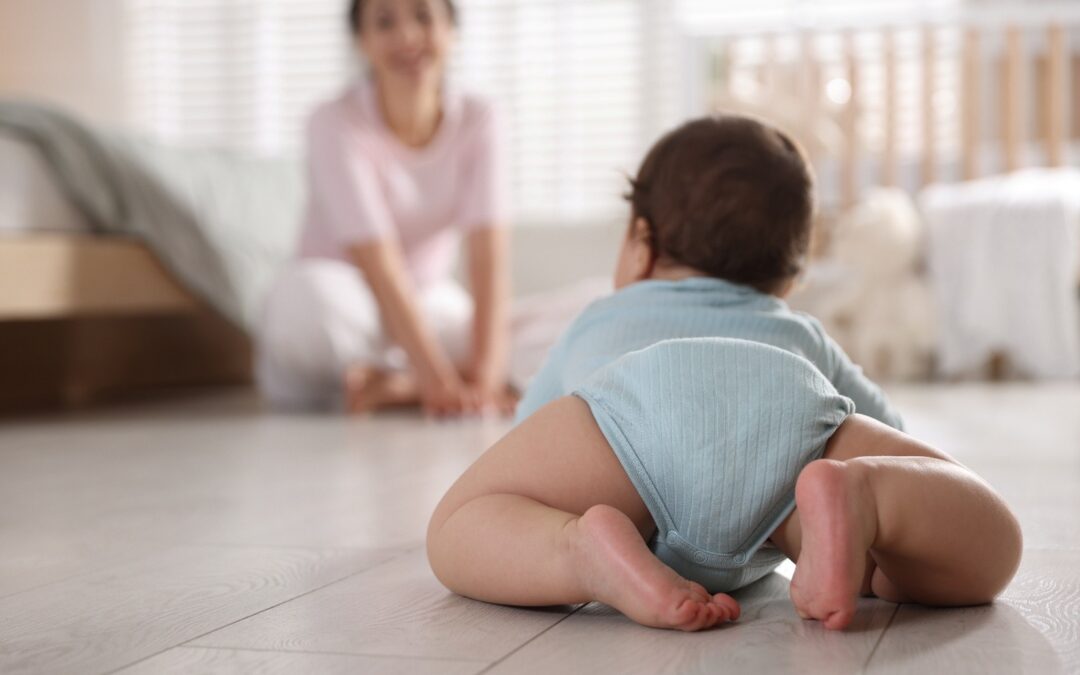
Just when you get used to seeing your baby move across the floor, another change may be right behind it. Crawling can quickly lead to attempts to pull up, stand while holding on, or move along the edge of the couch.
So, when do babies start crawling? Many babies begin traditional hands-and-knees crawling around 7 to 10 months, though the timing varies. Some crawl earlier or later, while others rely on scooting, rolling, belly-crawling, or another way of getting around.
Crawling is one part of a much bigger period of physical development.
Crawling Is Part of a Bigger Shift in Movement
During the second half of the first year, babies may be working on several movement skills at once.
They are learning how to shift their weight, change positions, balance, reach farther, and move with more control. Crawling may develop alongside sitting, pulling up, and standing rather than appearing as one isolated milestone.
That is why a baby’s progress does not always follow a tidy sequence.
Your baby may become very comfortable crawling before showing much interest in standing. Another baby may start trying to pull up while their crawling is still a little awkward.
What May Come After Crawling?
As your baby becomes stronger and more confident moving around, you may begin to notice new attempts to get upright.
That can include:
- Moving between sitting and other positions more easily
- Pulling up using furniture or another stable surface
- Standing while holding on
- Taking sideways steps while holding furniture
- Lowering back toward the floor with more control
- Eventually experimenting with independent steps
These skills can overlap. One does not need to be completely mastered before another begins.
Can Babies Pull Up Before They Crawl?
Yes, some babies may begin pulling to stand before they spend much time crawling traditionally.
Others may scoot or belly-crawl first. Some alternate between crawling and standing practice throughout the day. This can surprise parents who expect crawling to be fully established before anything else happens.
It is more useful to watch how your baby is gaining strength, coordination, and control over time than to compare their progress to one exact sequence.
How Long After Crawling Do Babies Walk?
There is no set amount of time between crawling and walking.
Some babies spend months happily crawling before they begin taking independent steps. Others become interested in standing and cruising soon after they figure out how to move across the floor.
Your baby may also move back and forth between skills. Crawling can remain the fastest way to get somewhere even after they begin standing or taking a few steps.
Rather than counting weeks from crawling to walking, watch for continued progress in how your baby moves and explores.
Mobility Can Change Your Home Quickly
Once your baby starts crawling and pulling up, familiar rooms can look very different from their point of view. Items that were previously unreachable may suddenly be within range. A low shelf, table edge, electrical cord, cabinet, or staircase may become interesting overnight.
As your baby becomes more mobile, check the spaces where they spend time and update babyproofing as needed. Pay particular attention to stable furniture, small objects, stairs, cords, and anything your baby may try to grab while pulling themselves upright.
Mobility can advance faster than parents expect, so it helps to prepare before your baby reaches the next surface or corner.
What If Progress Looks Different Than You Expected?
There is a wide range in how babies move through early motor development. Some may crawl for a long time. Others spend less time crawling traditionally and become interested in standing sooner.
If you have concerns about your baby’s movement or development, talk with their pediatrician. You should also mention a loss of a previously learned skill or persistent differences in how your baby uses the two sides of their body.
Your pediatrician can consider your child’s overall development and help you decide whether any additional follow-up is needed.
New Skills Can Show Up During the Day
Babies have many opportunities to experiment with movement throughout their day, including while they are at daycare.
At Celebree School of Exton, infant teachers observe each child’s development and provide safe, age-appropriate opportunities to move and explore. A teacher may notice that your baby has started pulling into a new position, standing with support, or becoming more confident moving across the floor.
Sharing those observations with families can help you see how your child’s abilities are changing across different settings.
Follow the Progress, Not a Perfect Sequence
Crawling can be an exciting milestone, but it does not come with a countdown to standing or walking.
Your baby’s movement may develop gradually, arrive in quick bursts, or overlap in ways you did not expect. Give them safe space to explore, watch how their abilities change, and bring questions to your pediatrician when you have them.
If you are looking for daycare in Exton, PA, Celebree School of Exton provides an infant environment where babies have opportunities to move, explore, and build new skills at their own pace. Schedule a visit to meet our team and learn more about infant care at Celebree.