
Touring a daycare for a baby can feel different from visiting a program for an older child. There is less emphasis on what the classroom “produces” and much more to understand about the everyday experience: Who responds when your baby is hungry? How are naps handled? What does learning look like before a child can talk, walk, or follow a group activity?
Parents often arrive with a long list of questions, but you do not need to ask everything imaginable to get a useful picture of an infant program.
At Celebree School of Eldersburg, the most helpful conversations tend to come back to a few basics: age groupings, individual routines, responsive care, early learning, and how families and teachers stay connected.
What Ages Does the Infant Program Serve?
It sounds like a simple question, but it is worth asking directly.
There is no single age range that applies to every infant daycare program. Celebree generally considers infant care part of the first year of life, although exact groupings can vary based on state licensing requirements and the individual school.
Parents may also want to ask how the transition into the next classroom is handled. A child’s age matters, but development and licensing requirements can also influence when that move happens.
That is especially relevant during infancy, when a few months can make a noticeable difference. A younger baby who needs frequent feedings and naps will have a very different day from an older infant who is crawling, pulling up, and eager to explore everything within reach.
How Are Feeding and Nap Routines Handled?
Rather than asking only, “What is your infant schedule?” it can be more useful to ask how individual schedules fit into the classroom day.
Babies do not all eat, sleep, or become tired at the same time. Their patterns also change quickly.
A good conversation about infant routines might cover how teachers learn a baby’s current feeding and sleep patterns, what happens as those patterns shift, and how the classroom balances individual needs with a predictable overall rhythm.
Infant daycare does have structure. There are feedings, naps, diaper changes, play, movement, books, songs, and interaction throughout the day. That structure should not require every baby to follow an identical clock.
For families, understanding that balance can make it much easier to picture how their own baby’s routine will fit into the classroom.
What Does Learning Look Like for an Infant?
“Do you have a curriculum?” is a reasonable question, but it does not always tell parents very much on its own.
A more revealing question is: How do teachers decide what my baby is ready to learn or practice next?
Infant learning should look like infancy.
It may involve reaching and grasping, listening to language, exploring textures, turning toward sounds, crawling across the floor, interacting with teachers, or experimenting with early communication. These experiences can look simple to an adult, but they give babies opportunities to learn about their bodies, other people, and the world around them.
At Celebree, teachers use observation and developmental assessment to help guide learning experiences. Assessment at this age is embedded in normal activities and interactions rather than handled through formal testing.
That means two infants close in age do not have to be working on exactly the same thing. One may be developing a new movement skill while another is showing more interest in sounds, gestures, or exploring objects.
What Should You Notice About Teacher Interactions?
Some of the most useful information on a daycare tour comes from watching instead of asking.
Notice how teachers interact with the babies already in the room.
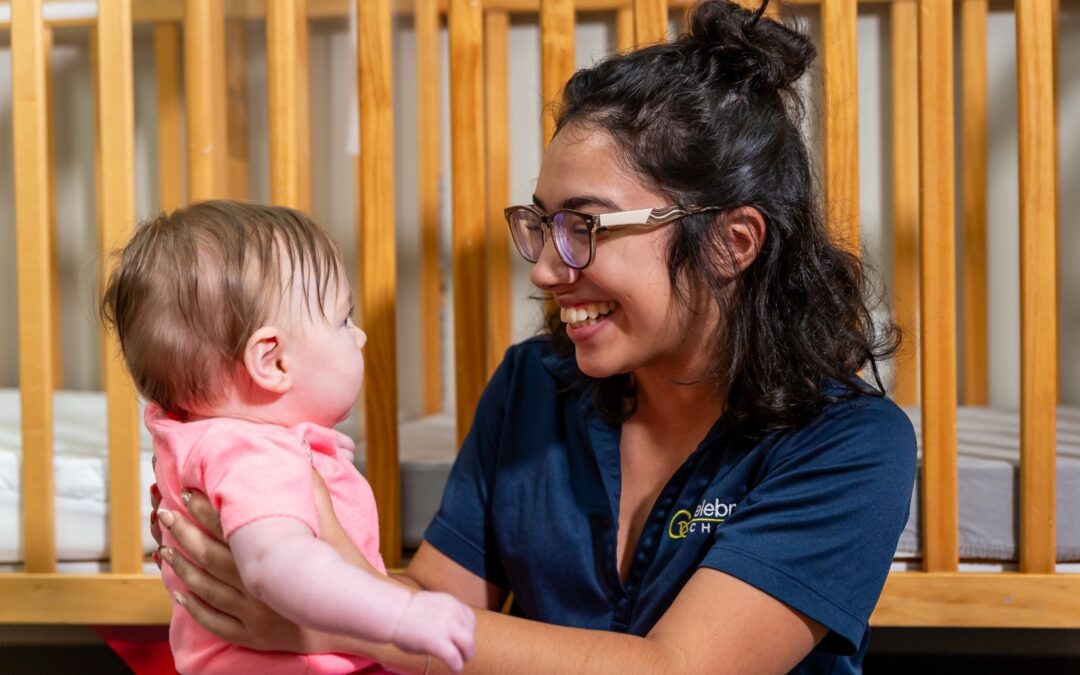
Are they talking to them during everyday routines? Do they respond when a baby makes a sound or reaches toward them? Are they sitting on the floor and engaging with children at their level? Does the environment give babies opportunities to move and explore safely?
Infants communicate long before they have words. They use facial expressions, body movements, sounds, and changes in behavior to tell adults what they may need.
Over time, familiar teachers begin to recognize those cues.
Celebree’s infant-care approach places particular emphasis on creating an environment that supports safety, secure attachment, and early emotional development. That makes the relationship between teachers and babies an important part of the daycare experience, not something separate from it.
How Does the School Get to Know Your Baby?
No two families arrive with exactly the same routines.
One baby may settle best with a pacifier. Another may have recently changed nap patterns. One may be beginning to explore new foods, while another is still following a different feeding routine.
Parents can ask what information teachers want to know before the first day and how they prefer families to share changes later.
Useful details might include feeding patterns, sleep cues, soothing preferences, emerging skills, and anything new happening at home.
That communication matters because infancy moves quickly. What worked a few weeks ago may stop working. A baby who was content staying in one spot may suddenly become very interested in moving across the room.
Teachers and families do not need to predict every change. They do need a way to keep each other informed as those changes happen.
How Will You Know What Happened During the Day?
Parents naturally want more information than “Your baby had a good day.”
It is worth asking how the school communicates details such as feedings, naps, diaper changes, activities, and notable moments.
Celebree uses Tadpoles to help families stay connected through daily information, photos, and messages.
That communication can be helpful for practical reasons too. If a baby naps longer than usual at school, eats differently, or shows interest in a new skill, parents have useful context when the child comes home.
The exchange should go both ways. Information from home can help teachers understand what they are seeing during the school day, and classroom observations can help families notice patterns they may not have seen yet.
What Should You Expect Before the First Day?
A tour is also a good time to get clear on the practical details.
Ask what needs to come from home, what should be labeled, and whether there are school-specific instructions for bottles, diapers, clothing, or other personal items.
Celebree’s infant guidance includes extra clothing, diapers and wipes, diaper cream, bottles, breast milk, formula or food as appropriate, bibs, and an optional pacifier. Families should still confirm exactly what Celebree School of Eldersburg currently requires.
It can also help to ask what information the teachers need about feeding, sleep, and routines before care begins.
You do not have to arrive with every detail perfectly organized. The first days are partly about the teachers, the baby, and the family learning how to work together.
A Good Tour Should Help You Picture Your Baby There
By the end of a visit, you should have more than a list of policies.
You should have a clearer sense of how your baby would move through the day: how teachers respond to individual needs, what learning looks like, how routines are handled, and how you will stay informed once you leave the classroom.
Those details often tell you more than a long checklist ever could.
If you are exploring infant daycare at Celebree School of Eldersburg, schedule a tour to visit the infant classroom and ask the questions that matter most to your family.