
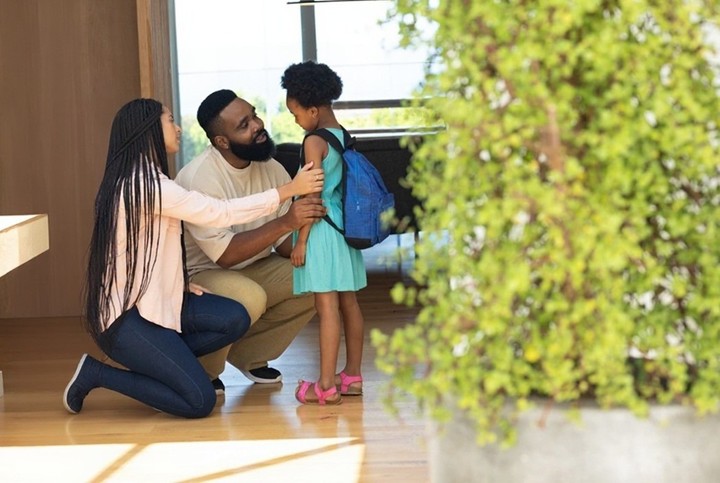
Parents spend a lot of time thinking about readiness.
Is your child ready for a larger classroom environment? Are they ready to spend part of the day away from home? Will they be comfortable with new teachers and new routines?
These are important questions, and they often lead to another one:
What is the hardest age to start daycare?
It’s a question that sounds like it should have a simple answer. After all, children go through distinct developmental stages. Surely one age must be more challenging than the others.
Yet when you talk to experienced educators, you’ll often hear a different perspective.
The hardest age to start daycare depends less on your child’s age and more on how they experience change, build relationships, and adapt to new situations.
Readiness Doesn’t Follow a Calendar
One reason this question is so difficult to answer is that children develop at different rates. You may know a toddler who walks confidently into any room and starts exploring immediately. You may also know a preschooler who prefers to stay close to a parent until they feel comfortable.
Neither child is doing anything wrong. They’re simply responding to the world in their own way.
As parents, it’s easy to focus on age because it’s something we can measure. Readiness is a little more complicated. It includes personality, temperament, previous experiences, and even the type of environment a child is entering.
That’s why there is no universal age that guarantees an easy transition.
What Your Child Is Learning During the Transition
When adults think about daycare, they often focus on practical considerations like schedules, meals, and daily activities. Children tend to experience it differently.
For your child, daycare is an opportunity to learn how to build relationships outside of the family, adapt to new routines, and become comfortable in a larger community. Those are significant developmental milestones, regardless of whether your child is one year old or four.
The adjustment period is often about much more than getting used to a new building. It’s about learning that unfamiliar situations can become familiar over time.
That’s a lesson children will continue using long after their daycare years are behind them.
Infants Need Consistency and Connection
For babies, daycare begins with relationships.
Infants aren’t concerned about classroom schedules or social dynamics. They’re focused on whether the adults around them respond consistently and help them feel secure.
This is why nurturing care matters so much during the first year of life.
When your baby experiences predictable routines and responsive interactions, they begin developing trust in the people caring for them. That trust creates a foundation that supports exploration, learning, and healthy development.
Many parents are surprised to discover that the transition can feel more emotional for them than for their child. Seeing your baby thrive in a new environment often takes time, but those early relationships can become a source of comfort for the entire family.
The Toddler Years Can Feel Intense
There is a reason so many conversations about daycare transitions eventually circle back to toddlers. Toddlers are in a stage of rapid growth. They’re developing independence, learning to communicate their wants and needs, and becoming more aware of their surroundings.
They’re also developing strong attachments. As a result, daycare can bring up some big emotions. Your child may be excited about painting, story time, or playing with classmates while still feeling upset when it’s time for you to leave.
Those seemingly conflicting emotions are actually a normal part of development.
With supportive teachers, predictable routines, and time to adjust, many toddlers grow increasingly comfortable and confident in their new environment.
Preschoolers Are Often Focused on Belonging
As children move into the preschool years, their attention often shifts toward social experiences. They may wonder who they’ll play with, what activities they’ll get to do, and whether they’ll fit into the classroom community.
At this stage, confidence becomes an important part of the transition.
Children want to feel capable. They want to contribute. They want to know they belong.
High-quality preschool programs create opportunities for children to build those skills through hands-on learning, collaborative play, and meaningful interactions with peers and teachers.
The classroom becomes a place where children can explore new interests while developing a stronger sense of self.
Starting During the Pre-K Years
Some families begin daycare later than others, often when kindergarten starts appearing on the horizon.
Parents occasionally worry that waiting longer will make the transition more difficult, but older children frequently bring strengths that support their success.
They are often better able to communicate their feelings, ask questions, and understand explanations about what to expect. While they may still feel nervous about entering a new environment, they often have more tools available to help them work through those feelings.
A strong pre-K program builds on those strengths by encouraging independence, problem-solving, and confidence while preparing children for the expectations they’ll encounter in elementary school.
What Helps Children Feel Successful?
After years of working with young children, many educators arrive at a similar conclusion. Successful transitions are rarely about finding the perfect age.
Instead, they’re about creating the right conditions for growth.
Children tend to thrive when they have consistent routines, caring relationships, and opportunities to develop trust in the people around them. They benefit from knowing what to expect and having adults who understand that adjustment takes time.
Perhaps most importantly, children thrive when they feel supported rather than rushed. Every child follows a different timeline, and that’s okay.
Looking Beyond the First Day
It’s natural to focus on the first drop-off, the first goodbye, or the first week of daycare. Those moments matter, but they don’t tell the whole story.
What often matters more is what happens afterward.
Your child begins recognizing teachers by name. They become familiar with classroom routines. They develop friendships, discover favorite activities, and gain confidence through new experiences.
Over time, daycare becomes less about the transition itself and more about the opportunities it creates.
The Right Support Matters More Than the Right Age
If you’re searching for the hardest age to start daycare, you’re probably trying to do what’s best for your child.
That’s exactly what good parents do.
The reassuring reality is that children can succeed at many different starting points. Some begin as infants. Others start as toddlers, preschoolers, or pre-K students. Each path looks a little different, but all can lead to meaningful growth.
At Celebree School of Eldersburg, we focus on helping children feel safe, supported, and confident as they navigate each stage of development. Through strong relationships, intentional learning experiences, and a whole-child approach to education, we help children build the skills they need for school and for life.
If you’re exploring daycare in Eldersburg, MD, we’d love to show you how our programs help children develop confidence, curiosity, and a lifelong love of learning.