
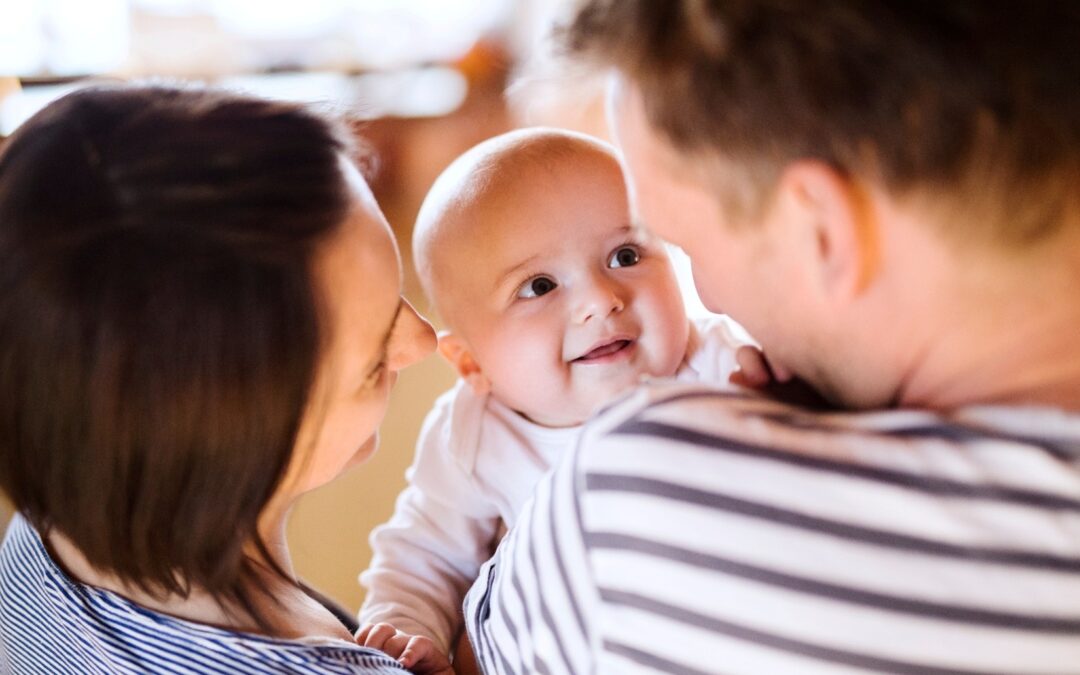
Babies begin communicating long before they can say much themselves. A newborn may settle at the sound of a familiar voice. A few months later, your baby may turn toward you, smile when you speak, react to their name, or anticipate what happens during a familiar routine.
That early understanding develops gradually throughout the first year. Babies listen, watch, respond, and begin connecting sounds and gestures with people and experiences around them.
These baby milestones offer a general picture of that progression, but every child develops on their own timeline.
Communication Starts Before Babies Know Any Words
In the first few months, communication is mostly about attention and response.
Around 1 month, babies may react to voices and briefly focus on a nearby face.
By about 2 months, many look closely at faces, smile when someone talks or smiles at them, and make sounds other than crying.
Around 3 months, cooing may become more frequent, and babies may stay engaged a little longer during face-to-face interaction.
At this stage, babies are not understanding words in the way an older child would. They are becoming more familiar with voices, expressions, and the rhythm of interaction.
Around 4 to 6 Months, Babies Become More Responsive
By about 4 months, many babies turn toward a voice and make sounds back when someone speaks to them.
Around 5 months, you may notice more interest in tone, repeated sounds, and familiar interactions. A playful voice or song may get a stronger reaction than it did a few weeks earlier.
By 6 months, many babies recognize familiar people, laugh, and take turns making sounds.
That back-and-forth vocal play matters. A baby may not understand a conversation yet, but they are beginning to experience the give-and-take that communication depends on.
Familiar Sounds Begin to Stand Out
During 7 and 8 months, babies often become more aware of repeated sounds, voices, and routines.
A familiar greeting may get a smile. A repeated song may prompt excitement. A baby may react differently when a parent or caregiver speaks compared with someone unfamiliar.
This does not mean babies suddenly understand full phrases. Their responses are often tied to repetition, tone, context, and familiarity.
Those early associations help make communication more meaningful over time.
When Do Babies Respond to Their Name?
Babies hear their names many times before they clearly show that they recognize them.
By around 9 months, many babies look when their name is called. They may also make repeated sounds such as “mamamama” or “babababa.”
Those sounds are an important part of language development, but they do not always mean a baby is deliberately naming someone yet. Babbling comes first, and meaningful words develop later.
Around this age, babies may also lift their arms to be picked up, react when a familiar caregiver leaves, and use facial expressions more clearly during interaction.
Gestures Add Another Layer to Communication
During the later months of the first year, babies begin using movement as part of communication.
Around 9 to 10 months, they may reach toward someone, lift their arms, react to a familiar gesture, or use sounds and movements together to get attention.
By about 11 months, some babies experiment more with waving or copying familiar actions. These gestures help babies participate in interaction before they have many spoken words.
Understanding Often Comes Before Saying the Word
One of the most interesting parts of early language development is that babies may show recognition before they can repeat the word themselves.
A baby may:
- Turn when they hear their name
- React to a familiar person’s voice
- Recognize a repeated song or phrase
- Anticipate part of a familiar game
- Pause or react when they hear “no”
These responses are small signs that sounds are beginning to carry meaning.
By around 12 months, many babies understand “no,” wave goodbye, and use “mama,” “dada,” or another special name meaningfully.
What Communication May Look Like Near the First Birthday
During 10 to 12 months, babies often become more deliberate about getting another person’s attention.
Around 10 months, you may hear more varied sounds and see clearer attempts to communicate with gestures or movement.
By 11 months, repeated vocal patterns may become more consistent, and babies may imitate familiar actions.
Around 12 months, many babies:
- Wave goodbye
- Play simple interactive games
- Use “mama,” “dada,” or another special name meaningfully
- Understand a familiar word such as “no”
- Look for something they saw being hidden
- Pull to stand
- Move while holding onto furniture
- Pick up small objects with the thumb and pointer finger
Independent walking is not required by the first birthday. Some babies walk earlier, while others continue crawling or cruising for a while longer.
Everyday Interaction Gives Language Meaning
Babies learn a great deal from ordinary conversation and familiar routines.
Hearing the same words during feeding, diaper changes, songs, stories, and play helps babies become familiar with the sounds people use to communicate. Facial expressions, gestures, and tone add meaning long before a baby understands every word.
At daycare in East Cobb, GA, responsive interactions, familiar routines, songs, stories, and everyday conversation give babies regular opportunities to listen, respond, and become familiar with the sounds and gestures people use to communicate.
A younger baby may simply turn toward a voice. Months later, that same child may respond to their name, wave during a familiar goodbye, or use a meaningful sound to get someone’s attention.
Language Development Has a Wide Range
Some babies are highly vocal from early on. Others spend more time watching and listening before they become especially expressive.
One baby may babble frequently but use gestures later. Another may respond strongly to familiar words while taking more time to say a first meaningful word.
Look at development over time rather than focusing on one isolated skill. If your baby is not meeting expected milestones, loses a skill they previously used, or you have concerns about hearing, communication, interaction, or development, talk with your child’s pediatrician.
During the first year, babies are learning far more about communication than their vocabulary shows. Long before they can tell you what they understand, they are listening, recognizing, responding, and gradually finding more ways to join the conversation.