
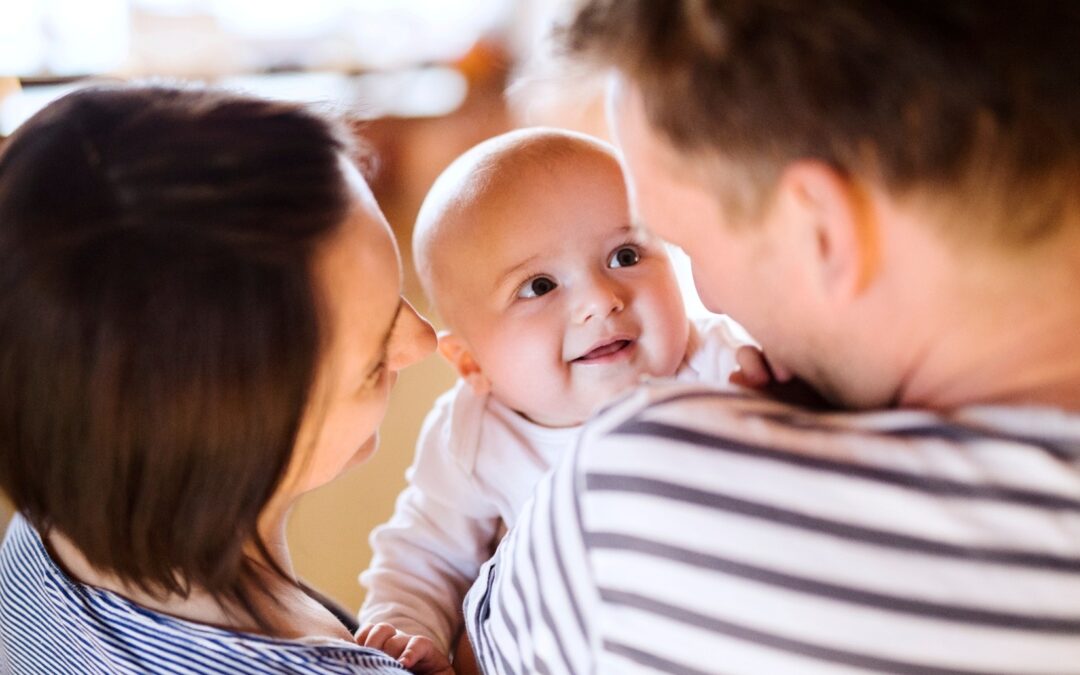
In the earliest weeks, your baby may settle when they hear you nearby or spend a few quiet moments studying your face. Months later, they may light up when a familiar person approaches or turn when you call their name.
Those changes happen gradually. During the first year, babies become increasingly aware of the people, voices, and routines around them. These baby milestones offer a general picture of that progression, but every child develops on their own timeline.
In the First Months, Familiar Voices Begin to Stand Out
Around 1 month, babies may react to nearby sounds and briefly focus on a face.
By about 2 months, many look closely at faces, smile during interaction, watch people move, and seem especially interested when a familiar caregiver approaches.
Around 3 months, babies may stay engaged with familiar faces for longer stretches and become more responsive during quiet face-to-face time.
At this stage, it is more useful to think about growing familiarity than to expect a baby to clearly recognize every person or sound.
Around 4 to 6 Months, Recognition Becomes Easier to See
By about 4 months, many babies turn toward a voice and make sounds back when someone talks to them.
Around 5 months, familiar songs, voices, or repeated interactions may begin getting stronger reactions.
By 6 months, many babies recognize familiar people, laugh, and take turns making sounds during interaction.
This is an important shift. Babies are becoming more socially aware, but recognizing a familiar caregiver is different from knowing their own name.
Babies May React Differently to Familiar and Unfamiliar People
During 7 and 8 months, some babies become noticeably more selective about the people around them.
A familiar caregiver may get an immediate smile or excited movement. Someone new may be studied more cautiously.
These reactions can vary widely. Some babies are highly expressive with familiar people, while others show recognition in quieter ways.
When Do Babies Recognize Their Name?
Babies hear their names many times before they clearly respond to them.
By around 9 months, many babies look when their name is called.
A younger baby may already turn toward a familiar voice, but responding specifically to their own name tends to emerge later.
And even then, it may not happen every single time. A baby who is focused on a toy or something happening nearby may not immediately turn.
What Else Changes Around 9 Months?
Recognition is only one part of what may be changing at this stage.
Around 9 months, many babies also sit without support, get into a sitting position, transfer objects between their hands, make repeated sounds, and lift their arms to be picked up.
They may also look for something that falls out of sight.
These different abilities often develop alongside one another, giving babies more ways to respond to the people and activity around them.
Familiar Routines Become Easier to Anticipate
During 9 to 11 months, repeated parts of the day may become increasingly recognizable.
A familiar song may prompt excitement. A repeated phrase may get a smile. A goodbye routine may become something your baby starts to anticipate.
Around 10 months, babies may become more deliberate about combining sounds, gestures, and movement during these familiar interactions.
By 11 months, some may imitate familiar actions or respond more consistently to repeated social cues.
Near the First Birthday, Recognition and Communication Work Together
By 12 months, many babies have several ways to show that they recognize people, words, and familiar interactions.
They may:
- Wave goodbye
- Play simple interactive games
- Use “mama,” “dada,” or another special name meaningfully
- Understand a familiar word such as “no”
- Pull to stand
- Move while holding onto furniture
- Pick up small objects with the thumb and pointer finger
These milestones show how recognition, movement, and communication continue developing together.
Familiar People Give Babies More Chances to Respond
Babies learn a great deal through ordinary interaction.
At daycare in Sterling, VA, babies spend their day with familiar caregivers who talk, respond, and interact with them during everyday routines.
For a younger infant, that may mean listening to a familiar voice or watching a caregiver’s face. Later, it may look like turning when their name is called or reacting when a familiar part of the day begins.
Babies Show Recognition in Different Ways
One baby may turn quickly toward familiar voices. Another may be especially expressive with familiar faces but take longer to respond consistently to their name.
That variation is normal.
Milestones are most useful when you look at development over time. Talk with your child’s pediatrician if your baby is not meeting expected milestones, loses a skill they previously used, or if you have concerns about hearing, communication, interaction, or development.
During the first year, recognition becomes easier to see in small moments. A familiar voice, a familiar face, and eventually a familiar name all give babies new ways to connect with the people around them.