

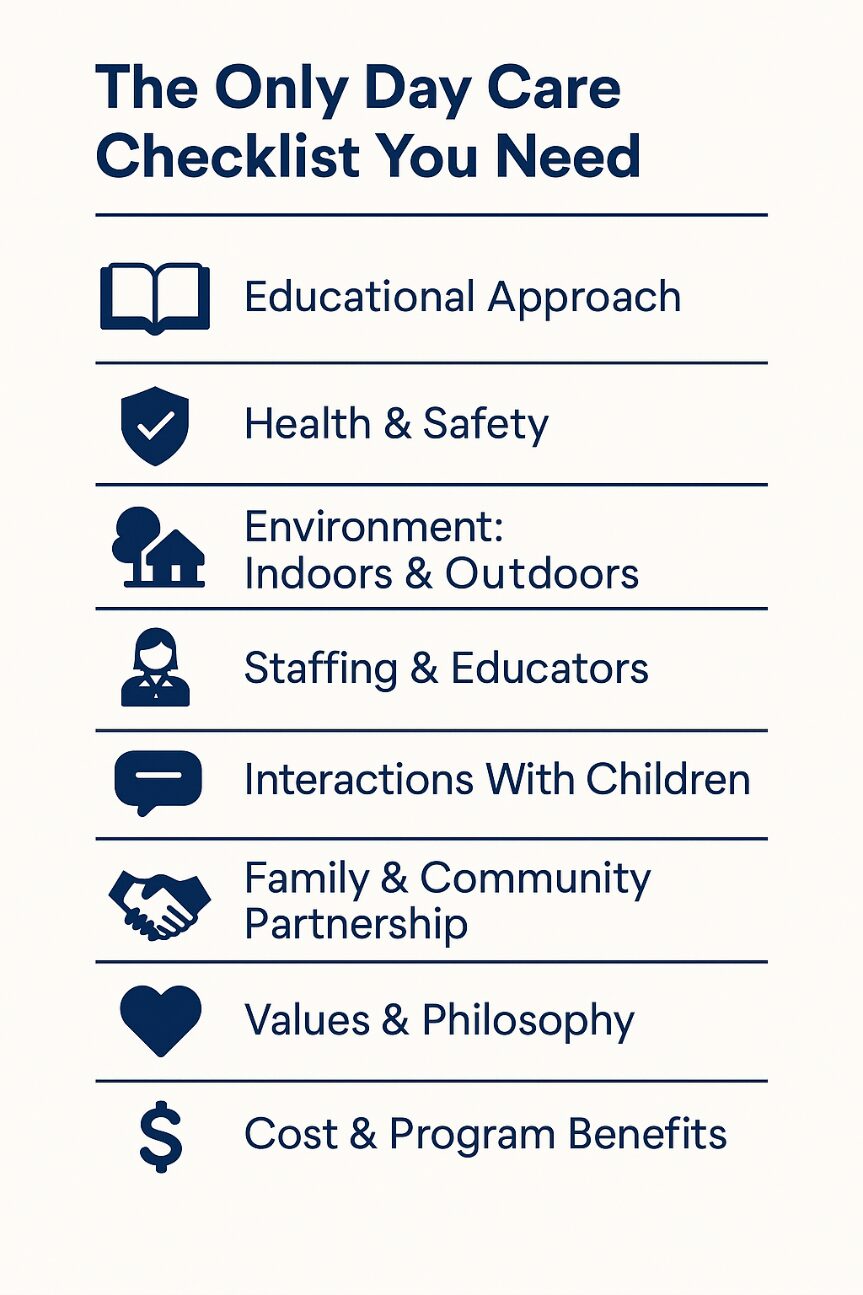
Choosing day can a little overwhelming. With so many programs nearby, families often wonder what truly sets one center apart from another and how to tell whether a program is the right fit for their child.
This day care checklist in Dallas, TX, was created to help bring clarity to your search. Use it during tours so you can compare learning environments, safety practices, and communication styles, all while keeping your child’s needs at the center of your decision.
- Educational Approach
Why it matters: A strong approach to early learning helps children build confidence, curiosity, and important early skills.
Questions to Ask
- What curriculum guides daily classroom experiences?
- How do teachers plan lessons across different age groups?
- How is progress observed and communicated with families?
- What programs are available from infancy through preschool?
- How does play support early math, reading, and social-emotional learning?
What to Observe
- Learning centers that invite hands-on exploration
- Children actively engaged in activities with purpose
- Teachers extending learning through conversation and guided discovery
- Health & Safety
Why it matters: A safe, predictable environment helps families feel confident leaving their child each day.
Questions to Ask
- How is access to the building monitored?
- What procedures are in place for visitor check-in?
- How are allergies and dietary needs managed?
- What is the illness and exclusion policy?
- Who holds CPR and first aid certification?
- How often are emergency procedures practiced?
What to Observe
- Clean, well-organized classrooms and hallways
- A smooth, structured drop-off routine
- Staff who appear attentive, calm, and prepared
- Environment: Indoors & Outdoors
Why it matters: Children learn from their surroundings, whether they’re exploring materials indoors or playing outside.
Questions to Ask
- Are materials arranged so children can access them independently?
- How often do children go outdoors?
- Is the play space shaded, safe, and age-appropriate?
- Do indoor classroom setups support creativity, independence, and discovery?
What to Observe
- Defined learning areas with open-ended materials
- Comfortable spaces for calming moments or reading
- Outdoor areas designed for movement, imagination, and exploration
- Staffing & Educators
Why it matters: The adults in the room shape your child’s day through connection, structure, and gentle guidance.
Questions to Ask
- What is the child-to-teacher ratio in each program?
- What training do educators complete before leading a classroom?
- Is ongoing professional development supported?
- How does the center maintain consistent staffing?
What to Observe
- Teachers interacting warmly and respectfully at eye level
- Consistent, patient communication
- A calm, supported classroom environment
- Interactions With Children
Why it matters: Strong relationships help children feel secure, confident, and ready to explore.
Questions to Ask
- How do teachers build meaningful connections with children?
- How is independence encouraged during daily routines?
- How are peer conflicts handled?
- What strategies support social-emotional development?
What to Observe
- Children approaching teachers comfortably
- Encouraging language throughout the day
- Thoughtful, gentle guidance during challenging moments
- Family & Community Partnership
Why it matters: Clear, consistent communication strengthens trust and helps children feel supported.
Questions to Ask
- How are daily updates shared with families?
- Are parent-teacher conferences offered?
- How is developmental progress communicated?
- What does the enrollment process include?
- How are families invited to participate in the school community?
What to Observe
- Communication boards or digital updates
- Staff who greet families warmly and make time for questions
- Values & Philosophy
Why it matters: A program’s values shape the tone of each day and the overall culture of the classroom.
Questions to Ask
- What philosophy guides the school’s early learning approach?
- How is inclusion represented in materials and routines?
- How does the program balance structure with child-led exploration?
- What values guide daily interactions and expectations?
What to Observe
- Inclusive books, toys, and learning materials
- Calm areas designed for emotional support
- Teachers modeling empathy, patience, and respect
- Cost & Program Benefits
Why it matters: Clear information helps families compare programs confidently and understand what each center includes.
Questions to Ask
- What is the tuition for each program?
- What does tuition include?
- Are meals, supplies, or enrichment activities part of the cost?
- Are additional fees required?
- Are sibling discounts available?
- What distinguishes this program from others in the area?
What to Observe
- Transparent explanations of costs and inclusions
- A level of quality and care that matches the investment
How to Use This Day Care Checklist During a Tour
- Bring it with you—printed or saved digitally
- Ask questions that matter most to your family
- Take notes after each visit
- Observe how your child responds to the environment and the teachers
A day care that feels warm, organized, and aligned with your values is always worth taking another look at.
A Final Word of Encouragement
Choosing day care is a big step, but having a clear checklist helps the process feel more manageable and reassuring. As you explore programs in the Dallas Arts District and surrounding neighborhoods, use this guide to compare each center thoughtfully and find the place where your child will feel supported, safe, and excited to grow.
Whenever you’re ready, Celebree School of Dallas Arts District would be glad to walk through your checklist with you during a tour.