
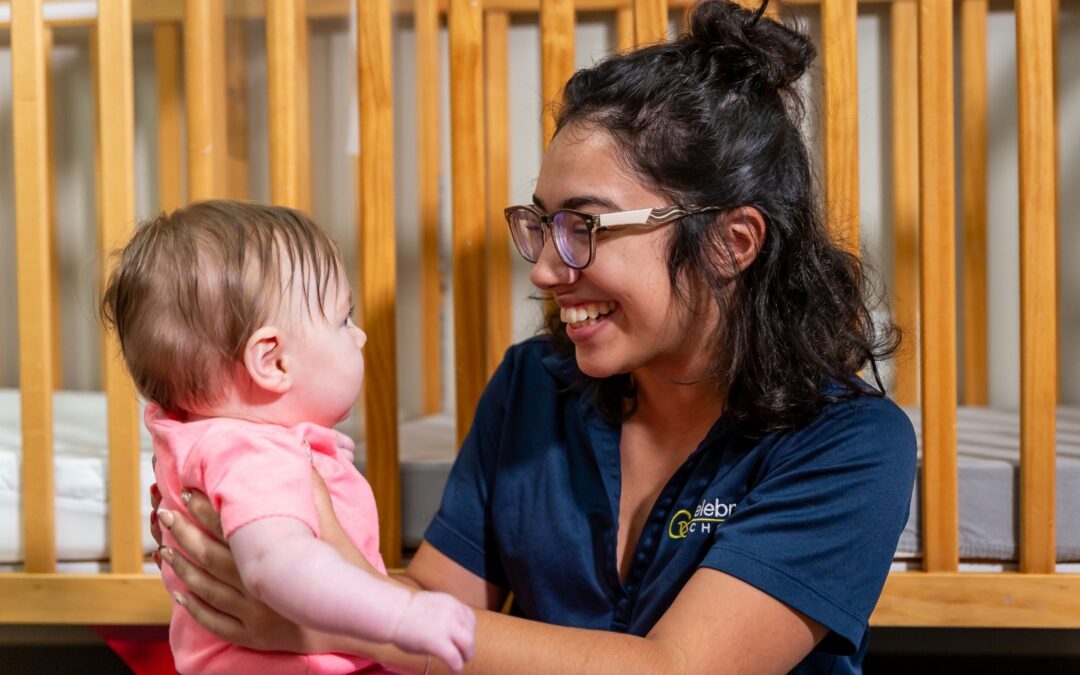
A lot can change between 6 weeks and a baby’s first birthday.
In the earliest months, feeding, sleep, diaper changes, comfort, and close interaction take up much of the time. As babies grow, they often spend longer stretches awake and find new ways to move, communicate, play, and explore.
At Celebree School of Dallas Arts District, infant daycare serves babies from 6 weeks to 12 months.
Across that age range, the classroom brings together everyday care, individual routines, play, early learning, and communication with families.
Infant Care Begins at 6 Weeks
Families start daycare at different points during infancy.
At Celebree School of Dallas Arts District, the infant program begins at 6 weeks and continues through 12 months.
That covers a period of considerable growth, but age alone does not determine what a child needs. Feeding and sleep patterns, comfort needs, interests, movement, and communication can vary widely among babies who are close in age.
Teachers work with those differences rather than expecting one experience to fit everyone.
Individual Routines Help Shape the Day
Babies sharing a classroom do not necessarily eat, sleep, or spend time awake on the same schedule.
The team at Celebree School of Dallas Arts District learns about each child’s routine and works with families to support consistency between home and school.
Knowing how feeding and sleep have been going provides useful context when a baby arrives.
Within the same room, some children may be resting while others are eating or ready to spend time awake. Infant care leaves room for those individual rhythms.
Everyday Care Is a Big Part of Infant Daycare
Feeding, diaper changes, sleep, and comfort are not just things that happen between activities. For infants, they make up a substantial part of the experience.
They also create natural opportunities for interaction. A caregiver might talk with a baby during a diaper change, respond to sounds or expressions while feeding, or offer comfort as the child settles for rest.
For a young baby, care and connection are often happening at the same time.
What Do Babies Do Between Feeding and Naps?
When babies are rested, comfortable, and alert, they have opportunities to interact with the people and environment around them.
At Dallas Arts District, infant experiences include tummy time, sensory play, songs, movement, language, and time with caregivers.
For a very young infant, that could be as simple as listening to a familiar voice, watching a face, or moving on the floor. Later, children often have more ways to handle objects, respond to sounds and language, and investigate what catches their attention.
Awake periods do not need to be packed with activities. Active play and quieter observation both have a place.
What Does Curriculum Look Like for an Infant?
Infant curriculum is very different from a preschool lesson. Learning happens through play, movement, language, interaction, and the routines already built into the classroom.
Teachers observe what children are doing and what interests them, then use those observations to offer developmentally appropriate experiences.
A song, a shared book, tummy time, sensory play, or time interacting with a caregiver can all be part of early learning.
There is no expectation that babies sit through formal lessons or work toward academic outcomes. The focus stays on experiences that make sense for their age and current abilities.
The Balance Shifts as Babies Grow
A child entering daycare at 6 weeks will likely spend their time differently several months later. Earlier in infancy, feeding, sleep, comfort, and shorter alert periods often take up more of the schedule.
As the months pass, babies generally gain additional ways to move, communicate, handle objects, and respond to what is happening around them.
That can open up more opportunities for play and interaction without turning development into a checklist. Teachers continue responding to the individual child rather than expecting every baby to progress in the same way or on the same timetable.
Teachers and Families Share What They Are Seeing
Regular time together helps teachers become familiar with how a child typically eats, sleeps, settles, communicates, and spends alert periods.
Families bring another important part of that picture.
Celebree School of Dallas Arts District keeps parents informed about feedings, naps, diaper changes, play, and classroom experiences. Those updates help families understand what happened while they were apart and give teachers useful context as needs and routines change.
The conversation between home and school helps keep care current instead of relying on assumptions about what a child of a certain age should need.
What Can Parents Expect From Infant Daycare?
Infant daycare during the first year includes much more than a schedule of bottles and naps.
Parents can expect everyday care to sit alongside opportunities for movement, language, play, interaction, and early learning. Individual feeding and sleep needs still matter, and the way a child participates will naturally change as they grow.
The details will look different from one baby to another, but attentive care, age-appropriate experiences, and regular family communication remain important throughout the infant program.
Explore Infant Daycare at Celebree School of Dallas Arts District
Learn more about infant daycare at Celebree School of Dallas Arts District and visit the classroom to see how feeding, sleep, play, interaction, and early learning fit together for babies from 6 weeks to 12 months.