
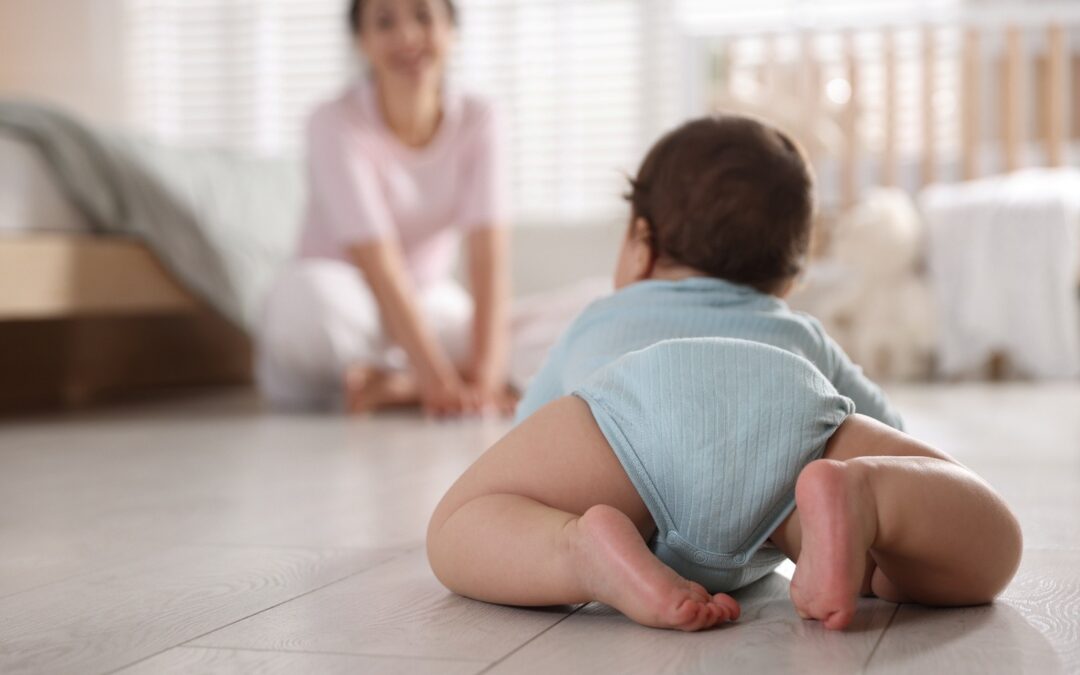
At first, your baby may be perfectly content reaching for whatever is nearby. Then something across the room catches their attention, and suddenly staying in one place is not nearly as appealing.
If you are wondering when do babies start crawling, many babies begin traditional hands-and-knees crawling around 7 to 10 months. Some start earlier or later, and some use scooting, rolling, belly-crawling, or another way to move.
As babies gain more control over their bodies, mobility gives them a new way to explore the things that interest them.
Mobility Opens Up a Bigger World
Babies are naturally drawn to faces, sounds, movement, and objects they want to investigate.
As their strength and coordination develop, they may begin reaching farther, shifting their weight, pivoting on the floor, or trying to move toward something that has their attention.
That does not mean curiosity determines when crawling begins. It does mean that once a baby has the physical ability to move, there is often plenty around them worth moving toward.
Sometimes There Is a Very Good Reason to Move
Parents sometimes ask how to motivate a baby to crawl. The answer can be surprisingly simple: give them safe opportunities to explore.
A familiar toy, your face, a mirror, or another interesting object may encourage your baby to reach, roll, scoot, or try a new movement. You do not need to place something so far away that it becomes frustrating. The goal is simply to create room for your baby to experiment.
You may also notice that their motivation changes from day to day. The toy they ignored yesterday may suddenly become the most important thing in the room.
Crawling May Not Be the Method They Choose
A baby who wants to get somewhere may find their own route.
Some babies crawl on hands and knees. Others move on their bellies, scoot while sitting, roll, or push themselves backward before figuring out how to go forward.
A small number of babies never spend much time using a traditional crawl. The method may look different, but the larger picture is still about increasing mobility and independence.
Give Curiosity Room to Work
Babies benefit from safe space where they can move freely and try things for themselves.
Supervised floor time gives your baby room to reach, roll, pivot, push up, and explore different positions. You can stay nearby, talk to them, and let them decide what catches their attention.
There is no need to turn movement into a structured lesson. Everyday exploration gives babies plenty of chances to discover what their bodies can do.
Once Your Baby Can Reach It, Assume They Will
Mobility changes what “out of reach” means.
A cord near the floor, a small object under a table, a low cabinet, or something resting on the edge of furniture may suddenly become accessible.
As crawling or other movement begins, take another look at the spaces your baby uses every day. Check for:
- Small objects that could become choking hazards
- Unsecured furniture
- Stairs
- Electrical cords
- Cabinets or drawers within reach
- Items that can be pulled down from low surfaces
Babyproofing is easier when you stay one step ahead of your baby’s growing reach.
What If Crawling Has Not Started Yet?
There is a wide range in how babies become mobile.
Some begin crawling on hands and knees around the middle of the first year, while others take longer or use another way to get around.
Pay attention to your baby’s overall progress rather than one exact movement. If something about their development concerns you, talk with their pediatrician. You should also mention a loss of a skill your baby previously had or ongoing differences in how they use the two sides of their body.
Exploration at Daycare
Babies have many chances to notice new people, objects, sounds, and activities throughout the day.
At Celebree School of Dallas Arts District, infant teachers provide age-appropriate opportunities for movement and exploration while observing each child’s development. They may notice a new way your baby is reaching, shifting position, or moving across the floor and share those observations with you.
That communication can give you another view of what is capturing your baby’s attention and how their movement is changing over time.
Let Their World Keep Getting Bigger
Crawling is exciting because it gives babies more freedom to investigate what interests them.
Give your baby safe room to move, notice the new ways they are exploring, and update your surroundings as their reach grows. If you have concerns about development, your pediatrician can help you decide what to look at more closely.
If you are looking for daycare in Dallas, TX, Celebree School of Dallas Arts District offers an infant environment where babies can move, explore, and discover throughout the day. Schedule a visit to meet our team and learn more about infant care at Celebree.