
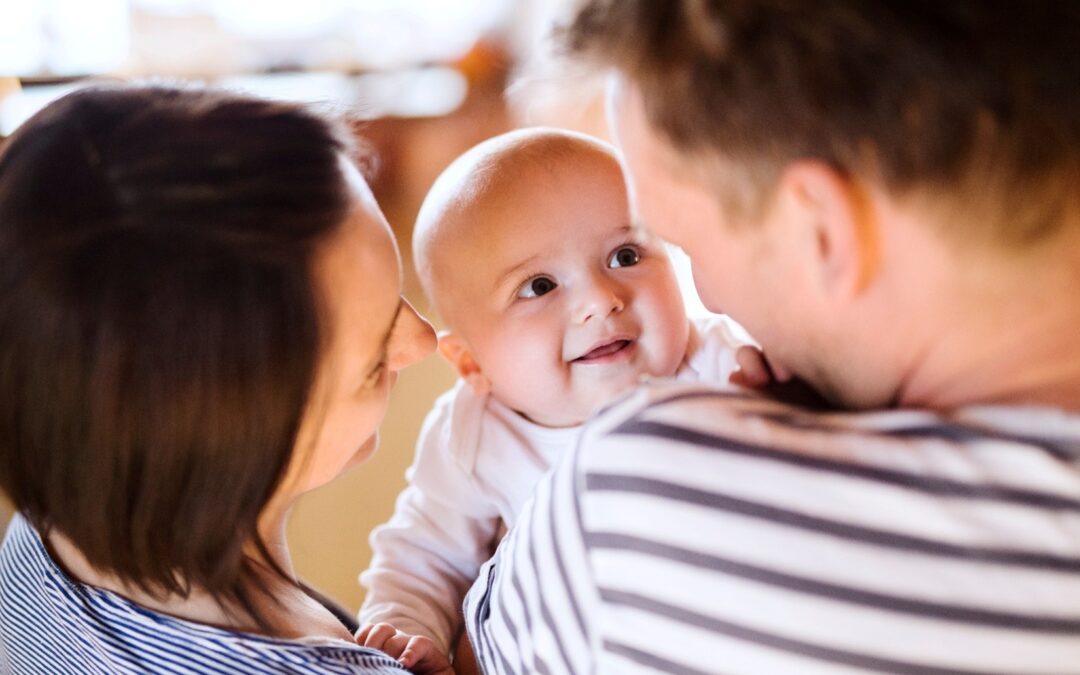
During the newborn stage, you are the one deciding whether your baby is on their back, tummy, or upright in your arms.
Over the first year, that gradually changes.
Babies begin gaining enough control to turn, roll, sit, shift from one position to another, and eventually pull themselves up. These baby milestones do not happen in one required order, but together they show how much more control babies gain over their own movement.
Changing Positions Starts With Head Control
Before babies can roll or sit, they first need more control over their head and upper body.
By around 2 months, many babies can briefly hold their head up during tummy time.
Around 3 months, you may notice less wobbling and more time spent looking around while their head is lifted.
By about 4 months, many babies hold their head steady without support and push up on their elbows or forearms during tummy time.
These early changes may not look like mobility yet, but they make bigger position changes possible later.
Rolling Is an Early Way to Reposition
As babies become stronger and more comfortable moving on the floor, they may begin turning onto their side or experimenting with rolling.
Around 5 months, some babies start making more noticeable attempts.
By about 6 months, many can roll from tummy to back.
The first rolls may be uneven or inconsistent. Your baby might roll in one direction more easily or complete a roll once and then not repeat it for several days.
That is common while a new movement is still becoming familiar.
Sitting With Support Is Different From Sitting Alone
Sitting also develops in stages.
Around 6 months, many babies can sit while leaning forward on their hands for support. They may stay upright briefly before tipping to one side or folding forward.
By 7 or 8 months, sitting may become steadier. Your baby might stay upright longer and begin using their hands more freely during play.
That is different from fully independent sitting, which comes later for many babies.
Getting Into a Sitting Position Is Another Milestone
By around 9 months, many babies can sit without support. They may also be able to get themselves into a sitting position.
That second skill is easy to overlook.
A baby who stays seated after you place them there is not doing quite the same thing as a baby who can move from the floor into sitting on their own.
Learning to get into position gives babies more control over what they do next, whether that means sitting to play, turning toward something interesting, or preparing to move again.
Babies Also Have to Learn How to Get Back Down
Changing positions is not always graceful.
A baby may pull into sitting and then tumble sideways. Later, they may pull up beside the couch and realize getting back to the floor is harder than getting up.
You may see your baby hold on tightly, bend their knees awkwardly, or sit down with a sudden bump.
With practice, these transitions usually become smoother. Babies are learning how to shift their weight and control their body in both directions.
Does Crawling Have to Come Next?
No. Some babies crawl after they become comfortable sitting. Others scoot, roll, creep, or find another way to get around.
Crawling is not an official 9-month milestone, and babies do not need to follow one exact sequence of sitting, crawling, and standing.
One child may crawl for months. Another may spend less time crawling before becoming interested in pulling up.
Pulling Up Brings a New Kind of Movement
Near the end of the first year, some babies begin moving from the floor toward standing.
Around 10 or 11 months, you may notice attempts to kneel beside furniture or pull upward.
By about 12 months, many babies pull to stand and move while holding onto furniture.
Independent walking does not need to happen by the first birthday.
For many babies, the bigger change at this stage is simply gaining the ability to move between the floor, sitting, and supported standing with less help.
Baby Milestones From Birth to 12 Months
Here is a quick look at how changing positions may develop throughout the first year:
- 1 month: Relies on caregivers for positioning and head support
- 2 months: Briefly holds their head up during tummy time
- 3 months: Head control may become steadier
- 4 months: Holds their head steady and pushes up during tummy time
- 5 months: Turning, weight shifting, and rolling attempts may become more noticeable
- 6 months: Many roll from tummy to back and support themselves while sitting
- 7 months: Sitting may last longer with less help
- 8 months: Moving between floor positions may become more active
- 9 months: Many sit without support and get themselves into a sitting position
- 10 months: Position changes may become easier and more deliberate
- 11 months: Some babies begin pulling up or standing with support
- 12 months: Many pull to stand and move while holding furniture
The months between official developmental checkpoints describe common patterns rather than milestones every baby needs to reach at that exact age.
Other Skills Are Changing Too
Movement is only one part of development during the first year.
By around 6 months, many babies laugh, recognize familiar people, and take turns making sounds.
By about 9 months, they may respond to their name, transfer objects between their hands, and make repeated sounds such as “mamamama” or “babababa.”
Near the first birthday, many wave goodbye and use “mama,” “dada,” or another special name meaningfully.
A baby may make quick progress with movement while taking more time with communication, or the other way around.
Everyday Movement at Daycare in Cypress
Babies have many chances to practice changing positions during ordinary floor play. A nearby toy may encourage a turn or reach, while time on the floor gives them space to roll, sit, or try moving in a new way.
At daycare in Cypress, TX, babies have room to move and explore as they gain more control over how they position their bodies.
For a younger infant, that may mean lifting their head or rolling onto their side. Later, it may look like sitting up to play or pulling into a new position without as much help.
There Is No Single Sequence Every Baby Must Follow
One baby may roll often but take longer to sit independently. Another may become a strong sitter before showing much interest in crawling. Some babies move quickly toward pulling up, while others stay closer to the floor for longer.
Milestones are most helpful when they show you how development is changing over time, not when they become a strict order your baby has to follow.
Talk with your child’s pediatrician if your baby is not meeting expected milestones, loses a skill they previously used, or if you have concerns about movement or development.
From relying on you for every position to choosing how they want to sit, roll, or pull up, babies gain an impressive amount of control during their first year.