
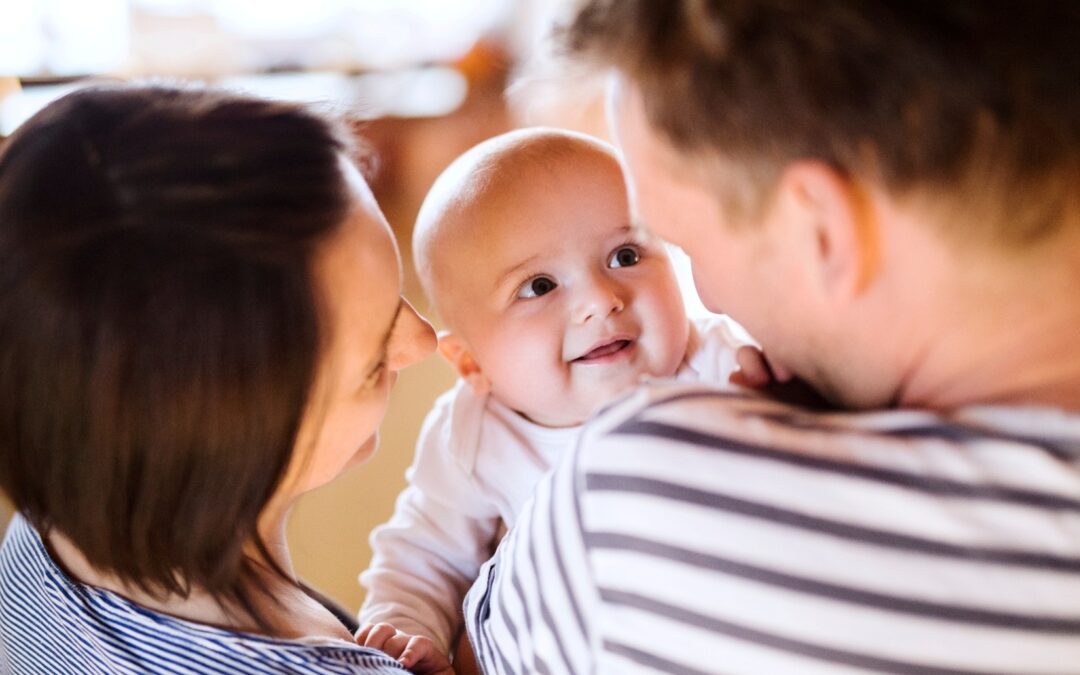
Memory in a baby’s first year does not look like remembering a birthday or telling you what happened yesterday. You are more likely to notice it in smaller moments: your baby brightens at a familiar voice, reacts when a favorite song begins, or looks toward the floor after a toy disappears.
As babies grow, they become increasingly able to recognize familiar people and patterns, anticipate what may happen next, and search for something they no longer see. These changes happen alongside other baby milestones in movement, communication, play, and social development.
Every baby follows their own timeline, so the ages below are general guideposts rather than exact deadlines.
Familiarity Starts Building in the First Months
During the newborn stage, babies live very much in the moment. Still, familiar voices, faces, and ways of being comforted begin to stand out.
Around 1 month, babies may briefly focus on a nearby face and react to voices or sounds.
By about 2 months, many look closely at faces, watch people move, smile during interaction, and appear especially interested when a familiar caregiver approaches.
Around 3 months, those responses may become easier to recognize. Babies may stay engaged longer during face-to-face interaction, coo back when someone talks, or react differently to familiar voices.
At this age, it is more helpful to think in terms of growing familiarity and recognition than adult-like memory.
Repeated Experiences Become More Recognizable
Between 4 and 6 months, babies often become much more responsive to people and experiences they know.
Around 4 months, many turn toward a voice, make sounds back during interaction, chuckle, and pay closer attention to what is happening around them.
By about 5 months, a familiar song, playful sound, or repeated routine may begin getting a stronger reaction.
Around 6 months, many babies recognize familiar people, laugh, take turns making sounds, reach for toys, and become increasingly active during play.
A routine does not need to be elaborate to become familiar. Hearing the same song before a nap or seeing the same face during a favorite game gives babies repeated experiences to recognize.
Around 7 and 8 Months, Babies May Anticipate What Comes Next
During the second half of the first year, some familiar patterns begin producing reactions before the most interesting part even happens.
A favorite song begins, and your baby gets excited. You start a familiar game, and they smile before you finish. A repeated phrase during a daily routine may bring a look of recognition.
Around 7 and 8 months, babies are also becoming steadier sitters and more capable of handling toys, which gives them more ways to participate in familiar activities.
These reactions do not mean a baby understands an entire routine the way an older child does. They simply show that repeated experiences are becoming more recognizable.
When Do Babies Recognize Their Name?
Babies hear their names many times before they clearly respond to them.
Earlier in infancy, your baby may turn toward a familiar voice or tone. By around 9 months, many babies look when their name is called.
That response may not happen every time. A baby who is deeply focused on a toy or something happening across the room may not immediately turn.
Around 9 months, many babies also react when a familiar caregiver leaves, make repeated sounds, lift their arms to be picked up, and smile or laugh during games such as peekaboo.
What Happens When Something Disappears?
One of the clearest ways early memory becomes visible is when babies begin looking for something they no longer see.
A younger baby may watch a spoon fall from a high chair and then shift attention somewhere else.
By around 9 months, many babies look for an object after it falls out of sight.
That small action tells you something has changed. Your baby is no longer responding only to what is directly in front of them. They are beginning to act as though the missing object is still there somewhere.
This growing understanding is often discussed as part of object permanence.
Familiar Games Begin to Carry a History
Peekaboo becomes more interesting as babies remember the pattern.
At first, your baby may simply watch your face disappear behind your hands. Later, they may smile as soon as you cover your face because experience has taught them what usually happens next.
During 9 and 10 months, repeated games, songs, and gestures may bring increasingly predictable reactions.
The game itself has not changed very much. Your baby has more experience with it and brings greater attention, anticipation, and recognition to the interaction.
Near the First Birthday, Babies Search More Deliberately
During 10 and 11 months, babies often become more active in finding, retrieving, and revisiting things that interest them.
They may return to a favorite toy, repeat a familiar action, or search after seeing something disappear.
By around 12 months, many babies look for an object they saw being hidden, such as a toy placed beneath a blanket.
Other common milestones near the first birthday include:
- Waving goodbye
- Playing simple interactive games
- Using “mama,” “dada,” or another special name meaningfully
- Understanding a familiar word such as “no”
- Pulling to stand
- Moving while holding onto furniture
- Picking up small objects with the thumb and pointer finger
These different abilities work together. A baby has more ways to remember something, look for it, move toward it, and communicate about what interests them.
Familiar Routines Give Babies Something to Recognize
Much of what babies begin recognizing during the first year comes from everyday life.
A repeated song, the sound of a familiar caregiver’s voice, a regular mealtime routine, or a favorite game all create patterns a baby experiences again and again.
At daycare in Fulshear, TX, familiar routines, responsive care, and nurturing interactions give babies repeated experiences with the people, sounds, activities, and patterns that make up their day.
For a younger infant, recognition may appear as a smile or change in attention. Months later, that same familiarity may show up as excitement when a routine begins or a determined search for a toy that disappeared.
Every Baby Notices and Remembers Different Things
One baby may show especially strong recognition of familiar people. Another may get excited the moment a favorite song begins. Some babies become fascinated with finding objects that disappear, while others spend more time focused on movement, sounds, or social interaction.
Development does not unfold in exactly the same order for every child.
If your baby is not meeting expected milestones, loses a skill they previously used, or you have concerns about hearing, vision, movement, communication, or overall development, talk with your child’s pediatrician.
During the first year, memory begins to show itself in ordinary moments. A familiar face, a repeated game, a missing toy, or a predictable routine may all reveal how much your baby is beginning to recognize and remember.