
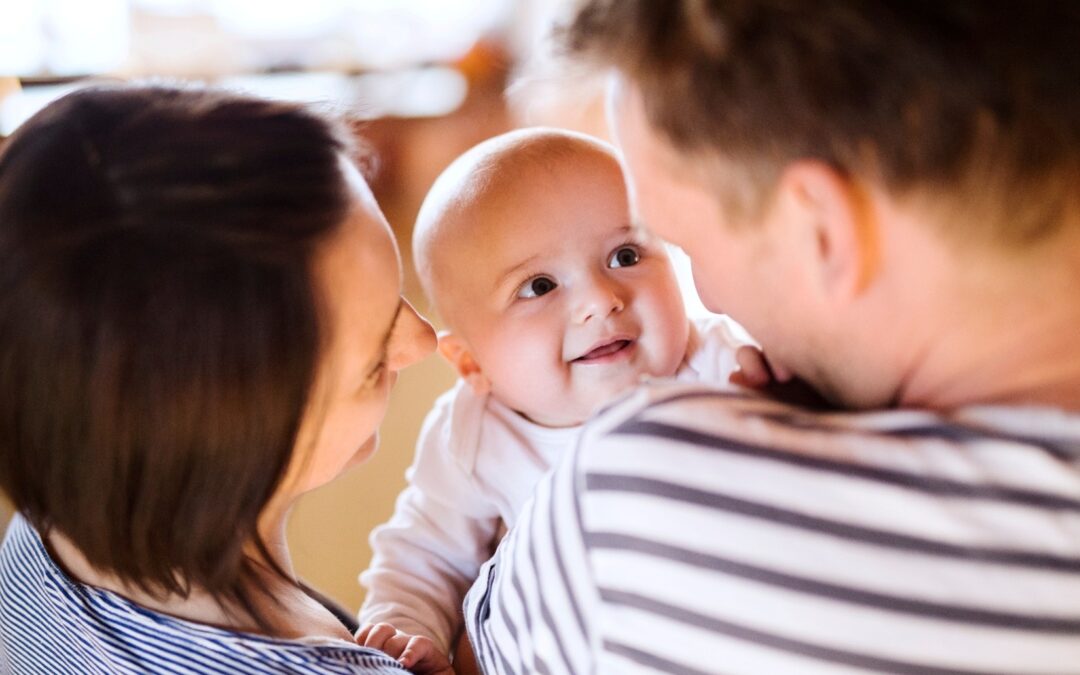
The first time you hear “mamama” or “dadada,” it is easy to wonder whether your baby just said a real word.
Sometimes they did. Often, those repeated sounds are still part of babbling.
During the first year, babies move from crying and cooing to experimenting with sounds, repeating syllables, and eventually using certain words with meaning. These baby milestones develop gradually, and the timing is different for every child.
First Come the Early Sounds
During the first month, crying is still a baby’s main way of getting attention.
By about 2 months, many babies begin making sounds other than crying. You may hear soft coos during calm moments or while your baby is looking at you.
Around 3 months, cooing may become more frequent. Babies may also spend longer watching faces and responding during quiet interaction.
These early sounds are not words yet, but they are part of the foundation for later vocal development.
Around 4 to 6 Months, Sounds Become More Interactive
By about 4 months, many babies make sounds back when someone talks to them and begin chuckling.
Around 5 months, vocal play may become more varied. Your baby might experiment with pitch, volume, or new combinations of sounds.
By 6 months, many babies laugh and take turns making sounds during interaction.
You may say something, pause, and hear a response. That back-and-forth rhythm is an important part of early communication, even though no real words are involved yet.
When Do Babies Start Babbling?
Babbling usually begins gradually during the middle of the first year.
Early coos often give way to more complex sounds. At 7 and 8 months, babies may begin repeating consonant-like sounds or strings of syllables.
By around 9 months, many babies make sounds such as “mamamama” or “babababa.”
This is an exciting change, but repeated “mamama” does not always mean your baby is deliberately calling for “mama.” At this stage, babies are often experimenting with the sounds their mouths can make.
When Does “Mama” or “Dada” Become a Real Word?
The difference is usually meaning.
A baby may babble “mamama” for weeks before using “mama” specifically for a parent. Over time, the sound may become more consistent and connected to a particular person.
By around 12 months, many babies use “mama,” “dada,” or another special name meaningfully.
There is no need to quiz your baby or wait for a perfectly clear pronunciation. Meaningful language develops gradually, and early words may sound different from the way an adult says them.
Babbling Develops Alongside Other Milestones
Communication is only one part of what changes during the second half of the first year.
Around 7 to 9 months, babies may also become steadier sitters, handle objects with more control, and experiment with ways to move.
By about 9 months, many look when their name is called, lift their arms to be picked up, and transfer objects between their hands.
These abilities often work together. A baby may look toward you, make a sound, and reach at the same time.
Gestures Help Fill the Gap Before More Words Arrive
Before babies have much spoken language, gestures give them another way to communicate.
During 9 to 11 months, a baby may reach toward something they want, lift their arms toward a caregiver, or begin experimenting with familiar gestures.
By around 12 months, many babies wave goodbye and understand a familiar word such as “no.”
Sounds, expressions, and movement all help babies make themselves understood while their vocabulary is still very small.
What Else May Be Happening Near the First Birthday?
By the end of the first year, babies are developing in many areas at once. Around 12 months, many babies:
- Pull to stand
- Move while holding onto furniture
- Play simple interactive games
- Pick up small objects with the thumb and pointer finger
- Wave goodbye
- Use a meaningful special name such as “mama” or “dada”
Some babies may also be taking independent steps, while others continue crawling or cruising. Independent walking is not required by the first birthday.
Everyday Conversation Gives Babies More to Listen To
Babies hear language throughout ordinary parts of the day. A caregiver talks during a diaper change, sings during play, or responds when a baby makes a sound.
At daycare in Somerville, NJ, babies hear familiar voices throughout the day and have plenty of chances to respond with sounds of their own.
A younger infant may answer with a coo. Months later, that response may be a string of babbled syllables or a sound used more clearly to get someone’s attention.
First Words Do Not Arrive on One Exact Schedule
One baby may babble constantly and take more time to use a meaningful word. Another may be quieter but begin using “mama” or another familiar name near the first birthday.
Both can be making steady progress.
Milestones are most useful as general guideposts. Talk with your child’s pediatrician if your baby is not meeting expected milestones, loses a skill they previously used, or if you have concerns about hearing, communication, interaction, or development.
From early coos to repeated babbling and first meaningful words, a baby’s voice changes dramatically during the first year. What begins as sound play gradually becomes another way to connect with the people around them.