
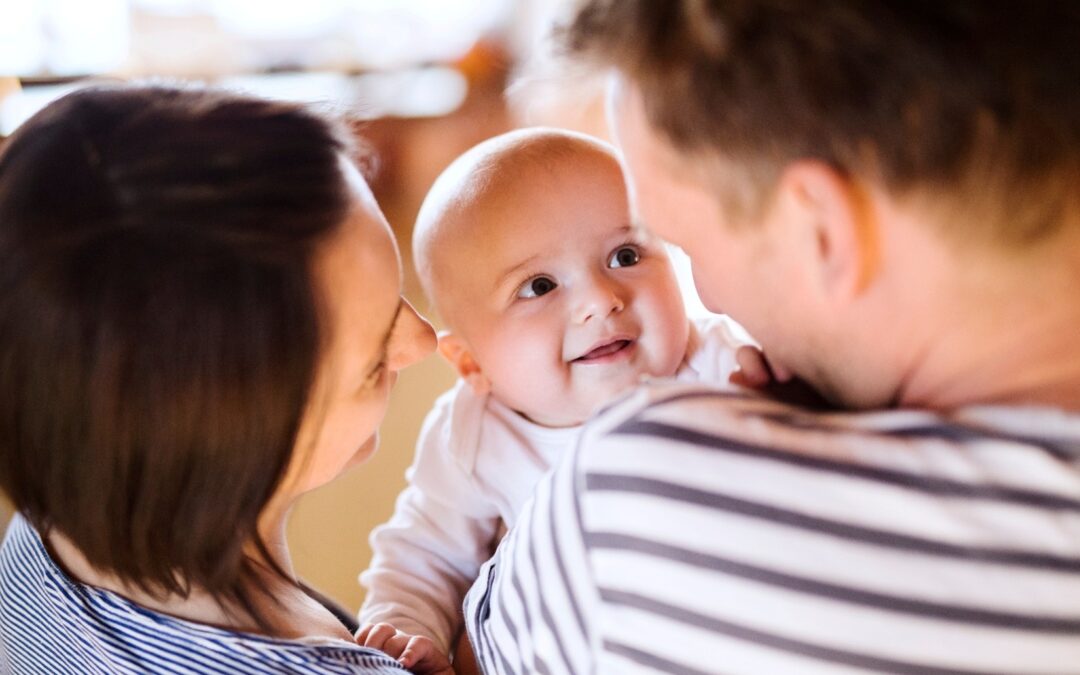
A newborn may spend a few quiet seconds studying your face. A few months later, that same baby might follow a toy across the room, reach for it, turn when they hear their name, or point toward something that interests them.
That changing attention is part of a much bigger developmental story. During the first year, baby milestones show up in movement, communication, social connection, and curiosity. Babies gradually become more aware of what is around them and more able to act on what captures their interest.
At First, the World Is Close
In the earliest weeks, babies are most interested in what is nearby. Faces, voices, sounds, and movement often draw their attention.
As alert periods grow longer, you may notice your baby spending more time looking at you, reacting to familiar sounds, or watching something move nearby. By around 2 months, many babies begin smiling in response to another person, making sounds besides crying, watching people move, and briefly lifting their head during tummy time.
These early milestones may seem simple, but they reflect growing awareness of the people and activity around them.
When Do Babies Make Eye Contact?
Babies begin paying attention to faces very early, but eye contact develops gradually.
At first, your baby may look toward your face only briefly. Over time, those moments may become more frequent and easier to notice, especially during calm periods when your baby is awake and alert.
You do not need to expect steady eye contact every time you interact. Babies look away when they are tired, distracted, hungry, or simply interested in something else.
Looking Starts Turning Into Reaching
Around the middle months of the first year, babies begin doing more with what they notice.
A toy is no longer only something to watch. Your baby may swipe toward it, reach, grasp, or bring it to the mouth for a closer look.
At the same time, you may notice other changes such as:
- More purposeful reaching
- Rolling
- Laughing
- Taking turns making sounds
- Better head and body control
- Sitting with support
Attention and movement are beginning to work together. Your baby sees something interesting and now has more ways to respond.
A New View Changes What Babies Notice
Sitting brings another shift.
As your baby becomes steadier upright, more of the room comes into view. Both hands are also freer for play, making it easier to pick up, turn, transfer, and explore objects.
A baby who once watched from your arms or the floor may now sit and scan the room, follow another person with their eyes, or reach toward something just beyond their immediate space.
That new perspective often makes curiosity more obvious.
Familiar Sounds and People Begin to Stand Out
Later in the first year, babies often show clearer signs of recognition.
They may react when a familiar person enters the room, anticipate part of a daily routine, or pay closer attention to a word or sound they hear often.
Their own name is one of those familiar sounds.
When Do Babies Recognize or Respond to Their Name?
Many babies begin showing a clearer response to their name during later infancy, although the response may not happen every time.
Your baby may turn, pause, look toward you, or shift attention when they hear their name. Other times, they may be too absorbed in a toy or activity to respond immediately.
That inconsistency is one reason it helps to look at the broader pattern rather than testing the same skill repeatedly.
Mobility Lets Babies Follow Their Interests
Once babies begin rolling, scooting, crawling, or finding another way to move, attention becomes even more active.
Something across the room may now be worth going after.
A toy, book, caregiver, or interesting object may give your baby a reason to shift position or move toward it. The exact way babies become mobile varies. Some crawl on hands and knees. Others scoot, creep, roll, or move differently before pulling up to stand.
The important change is that curiosity can now help guide where they go.
Near the First Birthday, Babies Start Sharing Their Attention
As the first birthday approaches, attention becomes more social.
Your baby may look toward something and then back at you. They may reach toward what they want, wave during a familiar routine, or use a gesture to draw your attention.
When Do Babies Point?
Pointing often begins during later infancy and gives babies another way to communicate before they have many spoken words.
A point may mean “look at that,” “I want that,” or simply “I noticed something.”
It is a small gesture, but it brings together several abilities: noticing something, choosing to respond, coordinating the movement, and involving another person in the moment.
Following Your Baby’s Attention During Play
You do not always need to decide what your baby should focus on. Sometimes the most useful thing you can do is notice what already has their attention.
If your baby is watching light move across the wall, studying a cup, reaching toward a toy, or listening to a sound outside the room, talk about it. Give them time to look, touch, move, or respond.
Those ordinary moments support exploration without turning play into a lesson or a milestone test.
Attention and Exploration in Daycare
The same principle applies when babies spend part of their week in care.
At Celebree School of Ashburn Farm, infant care includes responsive communication, familiar routines, sensory experiences, movement, and time to explore. At daycare in Ashburn, VA, caregivers pay attention to each baby’s cues and emerging abilities while giving them opportunities to engage with the people and environment around them.
For one baby, that may mean watching a caregiver’s face during a song. Another may be reaching toward a toy, turning toward a familiar voice, or moving across the floor to investigate something new.
The experience changes as the baby does.
When Development Raises Questions
Babies reach milestones on different timelines, but concerns are worth discussing.
Talk with your child’s pediatrician if your baby is not meeting expected milestones, loses a skill they previously had, or if something about how they look, listen, respond, communicate, move, or interact concerns you.
Over the first year, attention grows from brief moments of looking and listening into something much more active.
Babies begin following what interests them, moving toward it, recognizing what is familiar, and eventually finding ways to share that interest with you.